Mismatched washing equipment introduces severe operational risks to food processing lines, ranging from high product damage rates and excessive water waste to a critical failure in meeting microbiological safety standards. While lightweight, portable produce purifiers serve home kitchens adequately, commercial and industrial-scale operations require heavy-duty equipment built for high throughput and continuous durability. In industrial food processing, a "one-size-fits-all" approach consistently fails. The aggressive agitation required to strip heavy, compacted soil from root vegetables will instantly destroy delicate berries. Conversely, gentle bubble washes lack the mechanical force needed to clean heavily soiled tubers effectively.
Selecting the correct fruit and vegetable cleaning machine requires a structured evaluation framework. Facility managers and production engineers must assess raw material fragility, soil content, throughput requirements, automation needs, and existing facility infrastructure to ensure optimal performance and yield.
Material Dictates Technology: Delicate greens require air-bubble (surf) washing, while heavy root vegetables necessitate brush-and-spray or drum-type mechanical friction.
Throughput Alignment: Machine capacity must be calculated against peak daily raw material volume and perfectly synchronized with downstream processing speeds to prevent bottlenecks.
Resource Efficiency: Modern industrial washers must be evaluated on water recycling capabilities and energy consumption, directly impacting long-term operational costs.
Compliance & Sanitation: Equipment must feature sanitary design (e.g., 304/316 stainless steel) and accessible components to meet stringent food safety regulations and minimize downtime during changeovers.
Table of Contents
Toggle
How Produce Type and Contaminants Affect Washing Machine Selection
The primary success criteria for industrial washing operations involve achieving maximum contaminant removal—eliminating dirt, pesticides, and insects—while maintaining zero acceptable yield loss from mechanical damage. Understanding the physical properties of the incoming product dictates the required washing mechanism. You cannot run a mixed line of soft fruits and hard roots through the same mechanical setup without suffering massive yield losses or failing quality control checks.
Delicate Fruits and Leafy Greens (Berries, Spinach, Herbs)
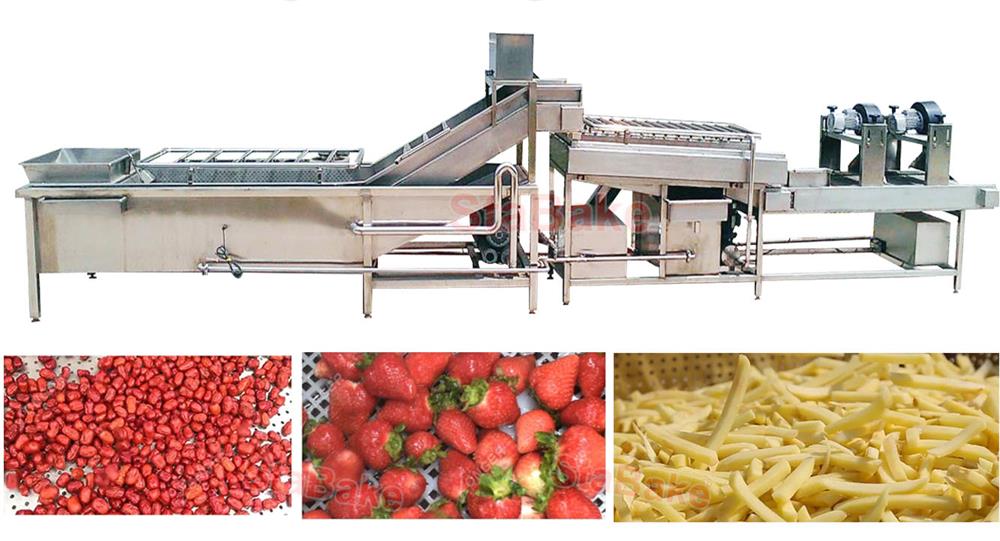
Items like strawberries, spinach, and fresh herbs possess thin skins and fragile cellular structures highly vulnerable to bruising and tearing. The primary contaminants on these products typically include surface pesticides, light field dust, and small insects. Processing these items requires non-abrasive, high-volume water flow rather than direct mechanical friction. Gentle tumbling actions suspend the produce in water, allowing contaminants to detach without subjecting the cellular structure to impact stress. When handling leafy greens, you also have to account for the tendency of leaves to clump together, which can trap insects and dirt in the center of the mass. High-volume water circulation helps separate these clumps naturally.
Root Vegetables and High-Soil Produce (Potatoes, Carrots, Beets)
Root vegetables present entirely different challenges due to heavy, compacted soil and irregular surface topographies. Dirt often embeds deeply into the crevices of potatoes or carrots. Removing this soil necessitates mechanical abrasion. Equipment must physically scrub the surface to break the bond between the soil and the vegetable skin. In many processing lines, this aggressive mechanical action is calibrated to perform simultaneous washing and light peeling, streamlining the preparation phase. If you are pulling carrots straight from muddy fields, a simple soak will not work; you need stiff bristles and high-pressure spray headers to blast the mud out of the root crowns.
Physical Soil vs. Chemical Residue Removal
Operators must differentiate between the mechanical force needed to remove physical dirt and the interventions required to neutralize chemical residues and microbial loads. Physical soil removal relies on water pressure, brush stiffness, and tumbling action. Conversely, neutralizing pesticide residues and reducing bacterial counts requires chemical or biological interventions, such as integrating ozone injection systems into the water bath to break down complex chemical compounds safely. You also have to manage the buildup of organic matter in the wash water, which can deplete sanitizing agents rapidly if not filtered out.
Floating vs. Sinking Produce Dynamics
The specific gravity of the raw material fundamentally impacts wash tank design. Floating items, such as apples or leafy greens, require specialized submersion conveyors or overhead water sprays to force the product beneath the water surface for thorough cleaning. Sinking items, like heavy root vegetables, naturally drop to the bottom of the tank. These require heavy-duty bottom augers or specialized incline conveyors to continuously move the product out of the wash zone and prevent accumulation. If you run sinking produce in a tank designed for floating items, the product will simply pile up on the tank floor, eventually jamming the discharge elevator.
Fruit and Vegetable Cleaning Machine Types Compared
Mapping specific machine architectures to the raw material profiles ensures efficient cleaning without product degradation. The market offers several distinct technologies tailored to different processing needs. Choosing the wrong technology means you will either damage your product or fail to clean it properly.
Technology Type
Mechanism
Best Suited For
Primary Advantage
Air Bubble (Surf) Washing
High-pressure air injection creating cavitation
Leafy greens, berries, tomatoes
Zero mechanical damage to fragile skins
Brush and Spray Roller
Rotating brushes with overhead water jets
Citrus, cucumbers, carrots, potatoes
Aggressive removal of heavy soil and waxes
Drum-Type (Rotary)
Perforated rotating cylinder
High-volume durable root vegetables
Continuous, high-capacity throughput
High-Pressure Spray Belt
Intense top/bottom water jets on flat mesh belt
Sturdy flat vegetables, crated items
Cleans without tumbling or rolling
Air Bubble (Surf) Washing Machines
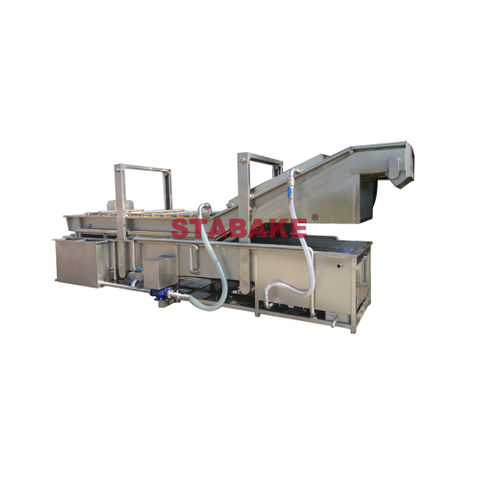
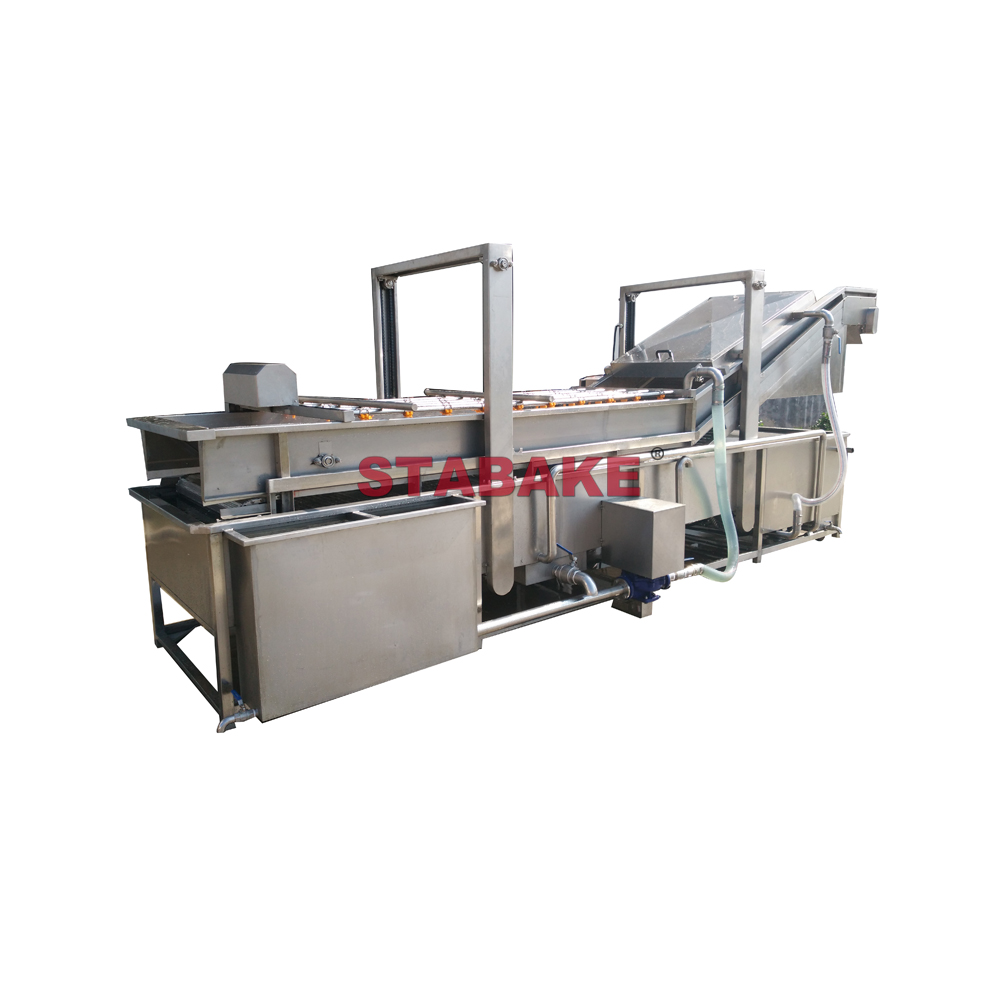
Air bubble washing machines utilize high-pressure air injected into the bottom of the water bath. This creates a continuous tumbling effect and microscopic cavitation bubbles that gently scrub the product surface. This technology is the standard choice for easily bruised items like leafy greens, strawberries, and tomatoes, providing thorough coverage without abrasive contact. The air blowers must be sized correctly; too much pressure will damage soft berries, while too little will fail to separate clumped spinach leaves. We often see operators adjusting the air valves manually based on the specific batch of produce coming in from the field.
Brush and Spray Roller Machines
This architecture combines rotating cylindrical brushes with high-pressure overhead water sprays. The produce rolls continuously over the brush bed, ensuring 360-degree contact. Operators can specify brush stiffness based on the application: soft nylon bristles gently clean citrus fruits without damaging the rind, while stiff, abrasive bristles are deployed for aggressive root vegetable cleaning and peeling. The alignment of the spray nozzles is critical here. They must be angled to hit the produce as it rotates, driving the loosened dirt down through the brush gaps into the collection pan below.
Drum-Type (Rotary) Washing Machines
Drum washers consist of a large, perforated, rotating cylinder, frequently equipped with internal spiral blades or hairbrushes. As the drum rotates, the produce tumbles against the internal surfaces and each other, dislodging heavy dirt. This design excels in high-volume, continuous processing environments handling highly durable root vegetables. The pitch of the internal spiral dictates the retention time. A steeper pitch moves the product through faster, which is fine for lightly soiled potatoes, but heavily mud-caked beets will require a shallower pitch to keep them in the drum longer.
High-Pressure Spray Belt Washers
In a spray belt washer, produce travels flat on a specialized mesh conveyor belt. Intense water jets target the product from both above and below. Because the items do not tumble or roll against each other, this machine is ideal for sturdy, flat-laying vegetables or delicate items processed directly inside plastic trays or crates. The mesh belt must have enough open area to allow the bottom sprays to penetrate effectively, but not so much that smaller produce falls through or gets wedged in the links.
Ultrasonic and Ozone Integration
Advanced systems integrate high-frequency sound waves (ultrasonics) to dislodge microscopic contaminants from deep crevices. Concurrently, ozone injection provides chemical-free microbial reduction. While integrating these technologies requires higher initial capital expenditure, the trade-off includes superior pesticide degradation, significantly lower bacterial counts, and extended product shelf life. Ozone generators require dry, clean feed air to function reliably in a wet processing environment, so proper installation of the air prep system is non-negotiable.
How to Size a Fruit and Vegetable Cleaning Machine
Selecting the right fruit and vegetable cleaning machine requires precise calculations to ensure the equipment meets current production targets and accommodates future growth. Guessing your capacity requirements usually leads to undersized equipment that chokes during peak harvest.
Calculating Daily Raw Material Throughput
Translating daily tonnage goals into hourly machine capacity requires factoring in variable soil loads. Heavy soil requires longer retention times in the wash tank, which effectively reduces the machine's hourly throughput. Production managers must calculate capacity based on the worst-case scenario—the highest expected soil load—to ensure the machine does not become a bottleneck during peak harvest seasons. If you expect to process 10 tons of carrots a day, but they come in with heavy clay soil, a machine rated for exactly 10 tons of clean carrots will fall behind. You need to oversize the capacity by at least 20-30% to handle field variations.
Determine the absolute peak hourly volume expected during the busiest harvest week.
Assess the maximum soil percentage by weight (e.g., 10% mud/rocks).
Calculate the required retention time to remove that specific soil type.
Select a machine with a rated capacity that exceeds your adjusted peak volume.
Matching Downstream Production Line Pace
A washing machine does not operate in isolation; it must integrate seamlessly with downstream sorting, cutting, or packaging equipment. Utilizing Variable Frequency Drives (VFDs) on the washer's conveyors allows operators to adjust wash times and output speeds dynamically. This synchronization prevents downstream equipment from starving for product or overflowing due to excessive feed rates. If your optical sorter can only handle 2 tons per hour, running your washer at 4 tons per hour will just create a massive pileup on the transfer conveyor.
Automation and PLC Control Systems
Modern industrial washers rely heavily on Programmable Logic Controllers (PLCs) and intuitive touchscreen interfaces. PLCs enable the creation of programmable "wash recipes." When switching from processing durable apples to delicate peaches, operators can instantly adjust water pressure, belt speed, and ozone concentration with a single screen tap, ensuring consistent results and minimizing changeover errors. We always recommend locking out the manual override functions so floor staff cannot arbitrarily increase belt speeds to rush a batch through, which compromises the wash quality.
Batch vs. Continuous Processing Models
Facility scale dictates the choice between batch and continuous systems. Batch washers require manual loading and unloading, making them suitable for commercial kitchens or small-scale facilities with limited floor space. Continuous inline systems automate the feed and discharge processes, representing an essential investment for industrial plants requiring uninterrupted, high-volume production. Continuous systems require a steady, metered feed to work properly; dumping a massive bin all at once will surge the tank and push unwashed product out the discharge end.
Installation Requirements for Fruit and Vegetable Washing Equipment
Evaluating installation requirements prevents unexpected infrastructure upgrades and ensures smooth deployment. You cannot just drop a massive wash line onto a factory floor without checking the utilities first.
Power and Voltage Configurations
Machine specifications must match the facility's power grid. Industrial washers are typically built to standard configurations such as 415V, 380V, 240V, 220V, or 110V. Heavy-duty motors driving large pumps and conveyors almost exclusively require 3-phase power. International deployments often necessitate custom electrical panels to align with regional voltage standards and safety certifications. Always verify that your facility's main breaker has enough amperage overhead to handle the startup surge of multiple large water pumps kicking on simultaneously.
Water Consumption and Filtration Systems
Industrial washing is inherently water-intensive. Evaluating integrated water recycling tanks and multi-stage filtration screens is critical. Systems that continuously filter and recirculate water drastically reduce total water consumption. Efficient sediment removal also lowers the volume of suspended solids in the wastewater, reducing municipal discharge fees and environmental impact. Look for wedge wire screens or rotary drum filters on the recirculation tanks; they do a much better job of pulling out fine grit than standard perforated plates.
Footprint and Layout Geometry
Spatial constraints dictate machine selection. Facilities must decide between linear footprints for straight processing lines or U-shape configurations to optimize tight spaces. Furthermore, layout planning must account for the physical space required around the machine for routine maintenance access, motor servicing, and daily sanitation crew operations. If you push the machine flush against a wall, your maintenance team will not be able to pull the brush shafts out for replacement, turning a one-hour job into a two-day teardown.
Common Vegetable Washer Risks and How to Avoid Them
Proactive identification of post-purchase risks ensures long-term operational stability and compliance. Equipment looks great on paper, but the real test happens during the third shift washdown.
Food Safety and Sanitary Design Standards
The primary risk in any washing equipment is bacterial harborage in hard-to-reach machine joints or dead legs in piping. To mitigate this, facilities must mandate TIG-welded 304 or 316L stainless steel construction. Equipment should feature sloped drainage pans to prevent standing water and utilize easily removable belts and brushes to facilitate rigorous Clean-in-Place (CIP) protocols. Avoid any machine that uses hollow tubing for the frame unless it is completely sealed; open tubing will fill with water and rotting organic matter, creating a massive sanitation failure.
Maintenance and Wear Parts
Unplanned downtime due to premature component failure halts entire production lines. Buyers must evaluate the availability and replacement frequency of high-wear items such as spray nozzles, brush rollers, and mesh belts. Prioritizing machines built with standardized, non-proprietary mechanical components ensures that replacement parts can be sourced quickly from local industrial suppliers. If the manufacturer uses custom-machined bearings that take six weeks to ship from overseas, you will be out of business the first time one seizes up.
Conclusion
To finalize your equipment selection and ensure optimal processing efficiency, follow these actionable steps:
Compile a detailed specification sheet documenting your exact raw materials, peak daily volumes, and anticipated soil levels.
Audit your facility’s utility infrastructure, specifically verifying 3-phase power availability and water discharge capacities.
Request a pilot test or material wash trial from the equipment manufacturer using your specific raw materials to validate performance.
Standardize your required wash recipes to program into the machine's PLC for faster changeovers.
For food processors seeking equipment that can be matched to specific raw materials, production capacities, and plant layouts, Stabake is a Jinan-based manufacturer specializing in food processing machinery, individual equipment, and turnkey production-line solutions. The company supports projects through process design, machine selection, installation, commissioning, maintenance, and OEM or ODM customization, helping buyers develop more reliable washing and food processing lines.
FAQ
Q: What is the difference between a bubble washing machine and a brush roller machine?
A: A bubble washing machine uses air cavitation to gently tumble and clean delicate items like leafy greens and berries without mechanical damage. A brush roller machine uses stiff rotating brushes and high-pressure sprays to aggressively scrub heavy soil and waxes from durable root vegetables and citrus fruits.
Q: How much water does an industrial fruit washing machine use?
A: Water consumption varies significantly based on machine capacity and soil loads. However, modern industrial machines utilize built-in water recycling systems and multi-stage filtration to continuously clean and reuse water, drastically reducing overall consumption compared to older, single-pass systems.
Q: Can one vegetable washer handle both leafy greens and root vegetables?
A: Generally, dual-use is highly limited due to conflicting mechanical requirements. Aggressive root washers will destroy leafy greens, while bubble washers cannot remove heavy soil from roots. Specialized or modular lines with programmable PLC recipes are recommended to prevent yield loss.
Q: What voltage configurations are available for industrial vegetable washers?
A: Industrial vegetable washers typically operate on standard industrial voltages, including 380V or 415V 3-phase power for heavy-duty motors. Smaller units may utilize 240V, 220V, or 110V. Manufacturers can customize electrical panels to meet specific regional power grids.
Q: How does ozone technology improve the vegetable washing process?
A: Ozone injected into the wash water acts as a powerful, natural oxidizer. It effectively neutralizes surface pesticide residues, kills harmful bacteria and pathogens, and extends the product's shelf life without leaving any harmful chemical residues behind.
Q: How do I determine the right capacity for my processing line?
A: Calculate your required capacity by identifying your peak hourly input volume. Adjust this figure based on soil severity, as heavier soil requires longer retention times in the wash tank, which lowers the effective throughput rate of the machine.