The food processing industry represents one of the largest manufacturing sectors worldwide, transforming raw agricultural materials into safe, nutritious, and convenient food products consumed by billions of people every day. From farm harvested grains and freshly slaughtered livestock to freshly picked fruits and vegetables, raw food materials must undergo a series of mechanical, thermal, chemical, and biological processes before they reach the consumer's table. The global food processing equipment market was valued at over USD 60 billion in recent years and continues to grow steadily, driven by increasing urbanization, changing dietary habits, rising demand for convenience foods, and increasingly stringent food safety regulations across both developed and emerging economies.
At the heart of every food manufacturing facility lies a diverse array of specialized equipment, each designed to perform specific unit operations with precision, consistency, and efficiency. These operations span the entire production pipeline, from initial cleaning and sorting of raw materials through size reduction, mixing, separation, thermal processing, forming, packaging, and preservation. The selection, configuration, and integration of this equipment determine not only the quality and safety of the final food product but also the productivity, profitability, and regulatory compliance of the entire manufacturing operation.
The equipment used in food processing includes cleaning and washing machines, size reduction equipment such as mills and grinders, mixing and blending systems, separation and filtration devices, heat processing equipment including cookers and pasteurizers, forming and shaping machines, packaging equipment, cooling and freezing systems, material handling and conveying systems, and quality control and inspection instruments. Together, these categories of equipment cover every stage of the food manufacturing process, ensuring that raw materials are efficiently transformed into safe, high quality, and shelf stable food products.
Understanding the functions, capabilities, and selection criteria of each category of food processing equipment is essential for food manufacturers, engineers, quality assurance professionals, and industry stakeholders. Whether establishing a new processing facility, upgrading an existing production line, or optimizing operational efficiency, a thorough knowledge of available equipment options enables informed decision making that balances production requirements, capital investment, operating costs, and regulatory compliance. In the following sections, we will explore each major category of food processing equipment in detail, examining their working principles, key features, applications, and contributions to efficient food manufacturing.
Each category of equipment addresses specific challenges in the food processing pipeline, and the optimal combination depends on the product type, production scale, facility layout, and target market requirements. By the end of this article, readers will have a comprehensive understanding of the equipment landscape in food processing and be better equipped to evaluate, select, and implement the right machinery for their specific needs.
Cleaning and washing equipment is designed to remove dirt, debris, chemical residues, microorganisms, and foreign matter from raw food materials before they enter the main processing pipeline, serving as the critical first line of defense in ensuring food safety and product quality.
Types of Cleaning Systems
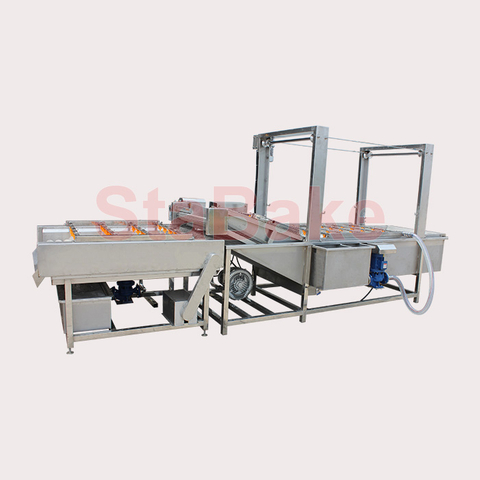
Cleaning and washing equipment encompasses a wide variety of machines tailored to different raw material types and contamination profiles. For fruits and vegetables, immersion washers and flume washers use flowing water to loosen and carry away soil, sand, and organic debris. These systems often incorporate air injection to create turbulence that enhances cleaning action, while brush rollers mechanically scrub the produce surface to remove stubborn contamination. Drum washers, which rotate raw materials within a perforated cylinder while spraying water, are particularly effective for root vegetables such as potatoes, carrots, and beets that carry significant soil loads.
For dry cleaning applications, air classifiers and vibratory sifters remove lightweight foreign matter such as chaff, dust, and insect fragments from grains, nuts, and seeds. Magnetic separators installed at multiple points in the processing line capture ferrous metal contaminants including nails, wire fragments, and equipment wear particles. Optical sorters using cameras and near infrared sensors can identify and reject foreign objects based on color, shape, and material composition, providing a level of precision that manual sorting cannot achieve.
Sanitization Integration
Beyond physical cleaning, modern washing systems increasingly integrate sanitization steps to reduce microbial loads on raw materials. Chlorine dioxide, ozone, peracetic acid, and ultraviolet light treatments can be incorporated into the washing process to achieve significant log reductions of pathogenic bacteria such as Salmonella, E. coli, and Listeria. The selection of sanitizing agent depends on the product type, regulatory approvals, and the potential for chemical residues to affect product quality.
The integration of sanitization with physical cleaning provides a multi hurdle approach to food safety. Physical washing removes the majority of contamination, while chemical or physical sanitization addresses remaining microorganisms. This layered approach is increasingly important as food safety regulations become more stringent and as consumers demand minimally processed products with extended shelf life.
Water Management and Sustainability
Washing operations consume significant volumes of water, making water management a critical consideration in equipment selection and process design. Modern washing systems incorporate water recycling and filtration capabilities that can reduce fresh water consumption by 50 to 80 percent compared to single pass systems. Reuse water is typically filtered and treated to remove accumulated solids and control microbial growth before being reintroduced into the washing process.
Common Cleaning Equipment Applications
Raw Material
Recommended Equipment
Key Contaminants Removed
Leafy vegetables
Flume washer with air injection
Soil, sand, insects, pesticide residues
Root vegetables
Drum washer with brush rollers
Soil, stones, organic debris
Grains and seeds
Vibratory sifter with magnetic separator
Chaff, dust, metal fragments, stones
Fruits
Immersion washer with sanitizer
Soil, microorganisms, chemical residues
Nuts
Air classifier with optical sorter
Shells, insect fragments, discolored pieces
2. Size Reduction Equipment
Size reduction equipment encompasses a broad range of machines including crushers, mills, grinders, shredders, and homogenizers that reduce the particle size of food materials to achieve desired texture, improve processing efficiency, enhance extraction yields, and create uniform product consistency.
Crushing and Grinding Mechanisms
Size reduction in food processing is achieved through several mechanical mechanisms, each suited to different material properties and desired particle sizes. Compression crushing, used in roller mills and jaw crushers, applies compressive force to break brittle materials such as grains, spices, and sugar. This method is energy efficient and produces relatively uniform particle sizes, making it ideal for flour milling, coffee grinding, and sugar processing operations where consistent particle size distribution is critical for downstream processing and product quality.
Impact grinding, employed in hammer mills and pin mills, uses high speed rotating elements to shatter materials through kinetic energy transfer. This approach is effective for tough, fibrous, or crystalline materials and can achieve very fine particle sizes. Hammer mills are widely used for grinding grains, spices, and dried vegetables, while pin mills excel at producing ultrafine powders for applications such as starch production and spice processing. The high energy input of impact grinding also generates heat, which must be managed through cooling systems to prevent thermal degradation of heat sensitive materials.
Cutting and Slicing Technologies
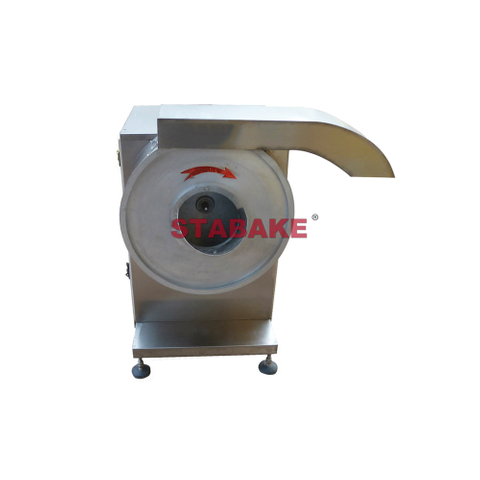
For applications requiring precise particle shapes and sizes, cutting and slicing equipment provides superior results compared to crushing or grinding. Industrial slicers, dicers, and shredders use sharp blades to produce uniform pieces with defined geometry, which is essential for products where visual appearance and consistent cooking characteristics are important. Ultrasonic cutting systems, which vibrate blades at ultrasonic frequencies, enable clean cutting of sticky, delicate, or multi layered products such as baked goods, confectionery, and frozen foods without deformation or product buildup on the blade.
Homogenizers represent a specialized category of size reduction equipment that reduces particle size in liquid systems by forcing the product through a narrow valve at high pressure. This process breaks down fat globules, cell fragments, and other suspended particles to create stable emulsions and uniform dispersions. Homogenization is critical in dairy processing for milk standardization, in beverage production for juice stability, and in sauce manufacturing for consistent texture and appearance.
Selection Criteria and Performance Factors
Several factors must be considered when selecting size reduction equipment for a specific application:
Material properties: Hardness, moisture content, fat content, and fiber content all influence the choice of equipment and operating parameters.
Desired particle size: Different equipment types excel at different particle size ranges, from coarse crushing to ultrafine grinding.
Production capacity: Equipment must be sized to handle the required throughput without creating bottlenecks in the production line.
Temperature sensitivity: Heat sensitive materials may require cooled grinding chambers or cryogenic processing to prevent quality degradation.
Hygiene and cleanability: Food contact surfaces must be easily accessible for cleaning and sanitization to prevent cross contamination between batches.
Size Reduction Equipment Comparison
Equipment Type
Mechanism
Typical Particle Size
Common Applications
Roller mill
Compression
50 to 500 microns
Flour milling, grain cracking
Hammer mill
Impact
100 to 2000 microns
Spice grinding, feed milling
Pin mill
Impact and shear
10 to 200 microns
Starch, sugar, fine powders
Industrial slicer
Cutting
0.5 to 25 mm slices
Meat, cheese, vegetables
High pressure homogenizer
Shear and cavitation
0.1 to 2 microns
Milk, juices, emulsions
3. Mixing and Blending Equipment
Mixing and blending equipment is designed to combine multiple ingredients into a homogeneous mixture, ensuring uniform distribution of components such as flavors, colors, nutrients, preservatives, and functional additives throughout food products to achieve consistent quality and taste in every batch.
Mixer Types and Configurations
The diversity of food products requiring mixing has driven the development of numerous mixer designs, each optimized for specific material characteristics and processing objectives. Ribbon blenders use helical ribbon elements that move material in opposing directions within a U shaped trough, creating a gentle folding action that is ideal for dry powder blending in applications such as bakery mixes, seasoning blends, and infant formula. The large working volume and relatively low energy input of ribbon blenders make them suitable for heat sensitive ingredients that could be damaged by excessive shear.
Planetary mixers, commonly used in bakery and confectionery operations, employ a rotating agitator that simultaneously revolves around the bowl, ensuring thorough mixing of viscous and semi solid products such as dough, batter, creams, and fillings. The interchangeable agitator attachments including dough hooks, paddle beaters, and wire whisks provide versatility for a wide range of product types within a single machine. For high viscosity products such as peanut butter, chocolate, and processed cheese, sigma blade mixers use heavy duty counter rotating blades that knead and fold the material to achieve uniform consistency.
Continuous vs. Batch Mixing
Food manufacturers must choose between batch and continuous mixing systems based on their production requirements. Batch mixing offers flexibility, allowing rapid changeover between different product formulations and providing complete batch traceability for quality assurance purposes. Batch mixers are particularly well suited for operations with diverse product portfolios and frequent recipe changes, such as specialty food manufacturers and contract processing facilities.
Continuous mixing systems, which blend ingredients in a flowing stream without discrete batch boundaries, offer advantages in high volume operations producing a limited range of products. Continuous mixers provide consistent product quality, reduced floor space requirements, and lower labor costs per unit of production. However, they require precise ingredient feeding systems and are less flexible when product changes are needed. The choice between batch and continuous systems depends on production volume, product variety, and the criticality of batch separation for quality control.
Hygienic Design Considerations
Mixing equipment must be designed to meet stringent hygiene standards to prevent microbial contamination and facilitate rapid cleaning between production runs. Key hygienic design features include smooth welds without crevices, sloped surfaces that drain completely, removable agitators for thorough cleaning, and food grade materials that resist corrosion and do not impart contaminants to the product. Mixers intended for ready to eat products may require sanitary cladding, sealed bearings, and CIP (Clean in Place) compatibility to achieve the level of hygiene required for these sensitive applications.
Mixer Selection by Product Type
Product Type
Recommended Mixer
Key Consideration
Dry powder blends
Ribbon blender
Gentle blending without particle damage
Bread and pastry dough
Planetary mixer with dough hook
Adequate gluten development
Liquid emulsions
High shear mixer
Stable emulsion formation
High viscosity pastes
Sigma blade mixer
Thorough kneading without dead zones
Seasoning and spice blends
V cone or double cone blender
Gentle blending without dust generation
4. Separation and Filtration Equipment
Separation and filtration equipment divides food materials into distinct components based on physical properties such as particle size, density, magnetic susceptibility, or solubility, enabling the recovery of valuable fractions, removal of impurities, and creation of specialized food ingredients.
Mechanical Separation Technologies
Mechanical separation forms the backbone of many food processing operations, from grain milling to juice production. Centrifugal separators use high rotational speeds to generate forces hundreds or thousands of times greater than gravity, enabling rapid separation of materials with different densities. In the dairy industry, centrifugal separators cream milk by separating lighter fat globules from heavier skim milk. In edible oil processing, centrifuges remove water and solid impurities from pressed or extracted oils. Decanter centrifuges, which combine centrifugal force with a screw conveyor, are used for continuous separation of solids from liquids in applications such as juice clarification and wastewater treatment.
Filtration systems provide separation based on particle size through porous media that retain solid particles while allowing liquid to pass. Plate and frame filters, leaf filters, and bag filters are used for coarse to medium filtration in applications such as juice clarification, edible oil polishing, and syrup purification. Membrane filtration technologies including microfiltration, ultrafiltration, nanofiltration, and reverse osmosis provide progressively finer separation capabilities, enabling applications such as whey protein concentration, juice clarification without thermal processing, and water purification for process and cleaning applications.
Extraction and Expression
Expression equipment applies mechanical force to extract liquids from solid materials, a process fundamental to juice production, oil extraction, and sugar refining. Screw presses use a rotating screw within a perforated cage to progressively compress material, forcing liquid through the cage while retaining solids. This technology is widely used for fruit juice extraction, vegetable juice production, and dewatering of food processing byproducts. Hydraulic presses apply direct pressure to material enclosed in cloth or mesh, providing gentle extraction that preserves product quality for premium juices and cold pressed oils.
The choice between screw pressing and hydraulic pressing depends on the material characteristics, desired yield, and product quality requirements. Screw presses offer continuous operation and high throughput but generate more heat and shear, which can affect product quality. Hydraulic presses provide gentler extraction with better quality retention but operate in batch mode with lower throughput. Many operations use a combination of both technologies, with hydraulic pressing for premium products and screw pressing for higher volume applications.
Pneumatic and Magnetic Separation
In dry processing operations, pneumatic and magnetic separation technologies play crucial roles in product purification and contaminant removal. Air classification separates particles by size and density using controlled air streams, enabling the production of flour fractions with specific protein contents and the removal of light impurities from granular products. Magnetic separation removes ferrous metal contaminants at multiple points throughout the processing line, protecting both product integrity and downstream equipment from damage.
Separation Equipment Applications
Application
Equipment Type
Separation Principle
Typical Products
Milk cream separation
Disc centrifuge
Density difference
Cream, skim milk
Juice clarification
Ultrafiltration membrane
Molecular size
Clear apple juice, wine
Oil extraction
Screw press
Mechanical expression
Vegetable oils, essential oils
Flour fractionation
Air classifier
Particle size and density
High protein flour, starch
Metal contaminant removal
Magnetic separator
Magnetic susceptibility
All dry food products
5. Heat Processing Equipment
Heat processing equipment applies controlled thermal energy to food products for purposes including cooking, pasteurization, sterilization, blanching, baking, frying, and evaporation, serving as one of the most critical categories of equipment for ensuring food safety, extending shelf life, and developing desired sensory characteristics.
Pasteurization and Sterilization Systems
Thermal preservation through pasteurization and sterilization is fundamental to food safety and shelf life extension. Pasteurization systems heat products to temperatures typically between 60 and 90 degrees Celsius to destroy pathogenic microorganisms and reduce total microbial loads while preserving product quality. Continuous pasteurizers using plate heat exchangers are standard in the dairy industry for milk processing, achieving rapid heating and cooling with excellent energy recovery. Tubular heat exchangers handle more viscous products such as creams, sauces, and fruit purees, while scraped surface heat exchacers process highly viscous or particulate containing products that would foul conventional heat exchanger surfaces.
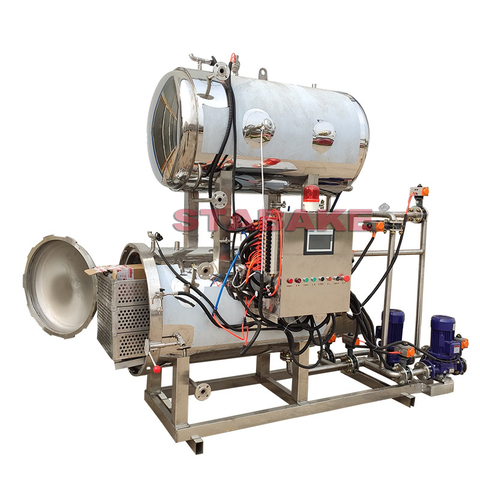
Sterilization systems achieve commercial sterility by heating products to temperatures above 100 degrees Celsius, typically 120 to 140 degrees Celsius, to destroy all pathogenic and spoilage microorganisms including heat resistant spores. Retort systems, which sterilize products in sealed containers, use steam, hot water, or steam air mixtures under pressure to achieve the required thermal processing conditions. Aseptic processing systems sterilize the product and packaging separately before combining them in a sterile environment, enabling the production of shelf stable products in lightweight packaging with superior quality retention compared to in container sterilization.
Cooking and Baking Equipment
Cooking equipment encompasses a wide range of technologies designed to apply heat for the purpose of transforming raw food materials into palatable, ready to consume products. Steam kettles and jacketed vessels provide gentle, uniform heating through steam jackets that surround the cooking vessel, making them ideal for soups, sauces, and stews. Continuous cookers using belt or screw conveyors transport product through heated zones, enabling high throughput processing of products such as ready meals, pasta, and rice.
Industrial ovens and bake ovens are critical in bakery operations, providing controlled thermal environments for bread, pastry, cookie, and snack production. Tunnel ovens, which move product through a long heated chamber on a conveyor belt, offer precise control over temperature profiles and baking times for consistent product quality at high production volumes. Direct gas fired ovens transfer heat through combustion gases, while indirect fired ovens use heat exchangers to separate combustion products from the baking atmosphere, providing cleaner processing for sensitive products.
Frying and Roasting Technologies
Frying equipment immerses food products in hot oil to achieve rapid cooking, crisp texture, and characteristic flavor development. Continuous fryers use conveyor belts to transport product through heated oil baths, enabling high volume production of snacks, French fries, and pre fried products. The design of continuous fryers must address oil filtration, temperature uniformity, and oil turnover to maintain product quality and manage oil degradation. Vacuum frying systems, which operate at reduced pressure to lower the boiling point of water, produce snacks with lower oil content and better color retention compared to atmospheric frying.
Roasting equipment applies dry heat to develop flavor, color, and aroma in products such as coffee, nuts, cocoa beans, and grains. Drum roasters, which rotate product within a heated cylinder, provide uniform roasting through consistent tumbling and heat exposure. Fluidized bed roasters suspend product in a stream of hot air, achieving rapid and uniform heat transfer with precise temperature control. The roasting profile, including temperature ramp rate, peak temperature, and duration, significantly influences the final product characteristics and must be carefully controlled for consistent quality.
Heat Processing Temperature Guide
Process
Temperature Range
Typical Duration
Primary Purpose
Blanching
85 to 100 degrees Celsius
1 to 10 minutes
Enzyme inactivation, color preservation
Pasteurization (HTST)
72 to 75 degrees Celsius
15 to 30 seconds
Pathogen destruction, shelf life extension
UHT sterilization
135 to 150 degrees Celsius
2 to 8 seconds
Commercial sterility
Retort sterilization
115 to 130 degrees Celsius
15 to 60 minutes
Shelf stable canned products
Industrial baking
180 to 250 degrees Celsius
10 to 45 minutes
Product transformation, crust formation
Continuous frying
160 to 190 degrees Celsius
1 to 5 minutes
Cooking, texture development, flavor
6. Forming and Shaping Equipment
Forming and shaping equipment transforms food materials into specific shapes, sizes, and configurations, enabling the production of consistently formed products such as patties, nuggets, cookies, pasta, confectionery, and extruded snacks that meet precise specifications for weight, dimensions, and appearance.
Extrusion Technology
Extrusion is one of the most versatile forming technologies in the food industry, capable of producing an enormous variety of product shapes and textures from a wide range of raw materials. An extruder forces material through a shaped die under controlled conditions of temperature, pressure, and shear, creating products with defined cross sectional profiles. Single screw extruders, which use one rotating screw within a barrel, are simpler in design and suitable for straightforward forming applications. Twin screw extruders, which use two intermeshing screws, provide superior mixing, heat transfer, and process control, enabling the production of complex products such as expanded snacks, breakfast cereals, texturized vegetable proteins, and pet foods.
The versatility of extrusion extends beyond simple forming. The combination of heat, pressure, and mechanical shear within the extruder barrel can gelatinize starches, denature proteins, gelatinize proteins, inactivate enzymes, and destroy microorganisms, effectively cooking the product during the forming process. This multifunctional capability makes extrusion one of the most efficient and cost effective unit operations in food processing, combining multiple process steps into a single continuous operation.
Depositing and Molding Systems
Depositing equipment precisely places measured quantities of product into molds, onto substrates, or onto conveyor belts for subsequent processing. Depositors are widely used in confectionery for chocolate and candy production, in bakery for cookie and cake batter dispensing, and in dairy for portion controlled yogurt and dessert packaging. Wire cut depositors use a taut wire to sever extruded dough or batter into individual pieces, while piston depositors use positive displacement to achieve precise volumetric filling for liquid and semi liquid products.
Molding systems create three dimensional product shapes by pressing or injecting material into cavities formed in molds or dies. In the meat processing industry, patty formers use mold plates to shape ground meat into uniform patties with precise weight and diameter specifications. Confectionery molding systems create chocolates, gummies, and hard candies with intricate shapes and surface details. The precision of modern molding equipment enables weight accuracy of plus or minus 1 percent, dramatically reducing product give away and improving yield.
Cutting and Portioning
After forming, many products require cutting or portioning to achieve final size specifications. Ultrasonic cutting systems, which vibrate cutting blades at frequencies above 20 kHz, provide clean, precise cuts through sticky, delicate, or multi layered products without deformation or product adhesion. Water jet cutting uses high pressure water, sometimes mixed with abrasive particles, to cut food products without mechanical contact, eliminating cross contamination risks and enabling cutting of frozen or delicate products. Guillotine cutters and rotary knives provide high speed portioning for products such as bars, sheets, and logs.
Forming Equipment by Product Category
Product Category
Equipment Type
Key Feature
Typical Output
Expanded snacks
Twin screw extruder
Expandable starch matrix control
100 to 500 kg per hour
Meat patties
Patty forming machine
Weight accuracy and shape consistency
500 to 5000 patties per hour
Cookies and biscuits
Wire cut depositor
Consistent portion weight
1000 to 10000 pieces per hour
Chocolate products
Depositing and molding line
Precise temperature and weight control
500 to 3000 pieces per hour
Pasta products
Extrusion press with die
Shape variety through die change
200 to 2000 kg per hour
7. Packaging Equipment
Packaging equipment encompasses the machines and systems used to contain, protect, preserve, and present food products, including filling machines, sealing equipment, labeling systems, and case packers that together ensure products reach consumers in safe, attractive, and informative packaging.
Filling Systems
Filling equipment dispenses measured quantities of product into packages with precise weight or volume control. Liquid fillers use gravity, pressure, or vacuum to fill bottles, jars, and pouches with products ranging from water and juices to viscous sauces and oils. Auger fillers use rotating screws to dispense dry powders and granular products such as coffee, spices, and dry mixes into containers with weight accuracy typically within plus or minus 1 percent. Piston fillers handle viscous and semi solid products including pastes, creams, and chunky sauces by using positive displacement to measure and dispense precise volumes.
The selection of filling technology depends on product characteristics, package type, production speed, and accuracy requirements. High speed beverage lines may use rotary fillers capable of filling hundreds of containers per minute, while specialty food products may require slower, more precise linear fillers. Modern filling systems increasingly incorporate checkweighers and feedback control to automatically adjust fill volumes in real time, maintaining consistent net weight compliance and minimizing product give away.
Sealing and Closing Technologies
Sealing equipment creates hermetic or secure closures on packages to protect product freshness, prevent contamination, and ensure tamper evidence. Heat sealers use controlled temperature, pressure, and dwell time to seal thermoplastic packaging materials including films, trays, and pouches. Continuous band sealers provide high speed sealing for premade pouches, while tray sealing systems seal pre filled trays with film lids, commonly used for ready meals, fresh meat, and produce. Induction sealers create hermetic seals on bottle openings using electromagnetic energy to heat and bond foil liners to container rims, providing tamper evidence and leak prevention.
For rigid containers, capping machines apply and tighten caps, lids, and closures with controlled torque to ensure consistent seal integrity without over tightening. Cap application methods include spindle capping for screw caps, chuck capping for precise torque control, and snap capping for press on closures. The sealing process is critical for product safety and shelf life, and seal integrity testing should be incorporated into quality control procedures to verify consistent performance.
Modified Atmosphere and Vacuum Packaging
Modified atmosphere packaging (MAP) and vacuum packaging technologies extend shelf life by altering the gas environment within the package. MAP systems flush packages with specific gas mixtures, typically combinations of nitrogen, carbon dioxide, and oxygen, to slow microbial growth, oxidative deterioration, and color degradation. The optimal gas mixture depends on the product type, with high oxygen mixtures maintaining red meat color, nitrogen rich mixtures preventing oxidation in snacks and dried foods, and carbon dioxide rich mixtures inhibiting bacterial growth in fresh produce and baked goods.
Vacuum packaging removes air from the package before sealing, creating a low oxygen environment that dramatically slows aerobic microbial growth and oxidative reactions. Thermoforming vacuum packaging machines form packages from roll stock, fill them with product, evacuate air, and seal them in a continuous operation. These systems are widely used for fresh and processed meats, cheeses, and ready meals, providing extended shelf life and excellent product presentation.
Packaging Equipment Selection Factors
Factor
Consideration
Impact on Selection
Product type
Liquid, powder, solid, or mixed
Determines filling technology and package format
Production speed
Units per minute requirement
Rotary systems for high speed, linear for flexibility
Package format
Bottles, pouches, trays, cans
Determines equipment configuration
Shelf life target
Days, weeks, or months
May require MAP or vacuum capabilities
Automation level
Manual, semi automatic, or fully automatic
Affects labor requirements and capital investment
Changeover frequency
Number of product or size changes per shift
Determines need for quick changeover features
8. Cooling and Freezing Equipment
Cooling and freezing equipment rapidly reduces the temperature of food products to preserve quality, extend shelf life, inhibit microbial growth, and maintain nutritional and sensory characteristics, representing essential technology for both fresh and processed food supply chains.
Chilling Systems
Chilling equipment reduces product temperatures to refrigeration ranges, typically 0 to 4 degrees Celsius, to slow microbial growth, enzymatic activity, and chemical deterioration. Air blast chillers use forced convection of cold air to achieve rapid and uniform cooling, making them suitable for a wide range of products including cooked foods, baked goods, and fresh produce. The high air velocity in blast chillers enables cooling rates several times faster than still air refrigeration, which is critical for meeting food safety requirements for rapid cooling of cooked products.
Immersion chillers and hydrocoolers submerge products in chilled water or brine for extremely rapid heat removal. Hydrocooling is particularly effective for fresh produce such as sweet corn, peaches, and leafy greens, where rapid post harvest cooling is essential for maintaining quality and extending shelf life. Plate coolers use refrigerated metal plates in direct contact with product packages, providing efficient cooling for flat or regularly shaped products such as blocks of cheese or cartons of eggs.
Freezing Technologies
Freezing equipment reduces product temperatures below freezing point, typically to minus 18 degrees Celsius or below, to preserve products for extended periods ranging from several months to over a year. The quality of frozen food products depends significantly on the freezing rate, as rapid freezing produces small ice crystals that cause less cellular damage and better texture retention compared to slow freezing. IQF (Individually Quick Frozen) systems freeze individual product pieces separately, preventing the formation of solid blocks and enabling consumers to use only the quantity needed.
Spiral freezers use a spiral conveyor belt within an insulated enclosure to provide long freezing residence times in a compact floor footprint, making them ideal for medium to high volume freezing of products such as hamburgers, pizzas, and baked goods. Tunnel freezers use straight conveyor belts through refrigerated tunnels, offering flexibility for various product types and sizes. Fluidized bed freezers suspend small product pieces such as peas, berries, and shrimp in upward flowing cold air, achieving extremely rapid individual freezing with excellent product separation.
Cryogenic freezing systems use liquid nitrogen or carbon dioxide as the cooling medium, achieving very low temperatures (minus 196 degrees Celsius for liquid nitrogen) and extremely rapid freezing rates. Cryogenic freezing is particularly valuable for premium products where quality retention is paramount and for products with irregular shapes that do not freeze uniformly in mechanical systems. The higher operating cost of cryogenic systems is offset by lower capital investment, smaller equipment footprint, and superior product quality for appropriate applications.
Energy Efficiency and Sustainability
Cooling and freezing operations are among the most energy intensive processes in food manufacturing, and energy efficiency has become a critical consideration in equipment selection and operation. Modern refrigeration systems incorporate variable frequency drives, electronic expansion valves, and intelligent defrost controls to optimize energy consumption based on actual load conditions. Heat recovery systems capture waste heat from refrigeration condensers for use in water heating, space heating, or other process applications, significantly reducing overall facility energy consumption.
Cooling and Freezing Method Comparison
Method
Temperature Range
Cooling Rate
Best Suited Products
Relative Cost
Air blast chilling
0 to 4 degrees Celsius
Moderate to fast
Cooked foods, baked goods
Medium
Hydrocooling
0 to 2 degrees Celsius
Very fast
Fresh produce
Low to medium
Mechanical tunnel freezing
Minus 30 to minus 40 degrees Celsius
Fast
Meat, poultry, fish, prepared foods
Medium to high
IQF fluidized bed freezing
Minus 30 to minus 40 degrees Celsius
Very fast
Small uniform pieces, berries, vegetables
High
Cryogenic freezing
Minus 80 to minus 196 degrees Celsius
Extremely fast
Premium products, irregular shapes
Low capital, high operating
9. Material Handling and Conveying Equipment
Material handling and conveying equipment transports food materials, ingredients, work in progress, and finished products between processing stages, providing the connective infrastructure that enables continuous, efficient, and hygienic food manufacturing operations.
Conveyor Systems
Conveyor systems form the backbone of material handling in food processing facilities, moving products horizontally, vertically, and between processing stages with minimal manual intervention. Belt conveyors, which use continuous belts made from food grade materials such as polyurethane, polyethylene, or stainless steel mesh, are the most common conveyor type due to their versatility, gentle product handling, and ease of cleaning. Modular plastic belt conveyors offer additional flexibility, allowing curved paths, accumulation zones, and specialized surfaces for different product types.
Screw conveyors use rotating helical screws within troughs to transport bulk materials such as grains, powders, and semi solid products. They are particularly effective for enclosed transport that prevents dust generation and cross contamination. Vibratory conveyors use controlled vibration to move products along a trough or tube, providing gentle handling that is ideal for delicate products and enabling simultaneous functions such as spreading, aligning, and dewatering during transport.
Pneumatic and Pumping Systems
For liquid and semi liquid products, pumping systems provide efficient transport between processing vessels and equipment. Positive displacement pumps, including progressive cavity pumps, lobe pumps, and peristaltic pumps, handle viscous products and those containing particulates without damaging sensitive ingredients. Centrifugal pumps provide high flow rates for low viscosity liquids such as water, milk, and thin juices. Sanitary pump designs with smooth surfaces, crevice free construction, and CIP compatibility are essential for food applications where hygiene is paramount.
Pneumatic conveying systems transport dry bulk materials through enclosed pipelines using air as the conveying medium. Dilute phase systems suspend material in high velocity air streams, suitable for lightweight materials over short to moderate distances. Dense phase systems move material in slower, more concentrated slugs, providing gentler handling for fragile or abrasive materials. Pneumatic conveying offers advantages of enclosed transport, minimal cross contamination risk, and flexible routing through complex facility layouts.
Automation and Integration
Modern material handling systems increasingly incorporate automation technologies to improve efficiency, reduce labor costs, and enhance food safety. Automated guided vehicles and robotic transfer systems move materials between processing areas without human intervention, reducing the risk of contamination and freeing personnel for higher value tasks. Warehouse management systems coordinate the movement and storage of raw materials, work in progress, and finished products, optimizing inventory levels and ensuring first in first out material flow.
The integration of material handling equipment with process control systems enables synchronized operation of the entire production line. Sensors monitoring conveyor speed, product flow, and equipment status feed real time data to central control systems that automatically adjust upstream and downstream equipment to maintain balanced production flow. This level of integration prevents bottlenecks, reduces product accumulation, and ensures that each processing stage receives materials at the optimal rate for efficient operation.
Conveyor Selection Guide
Product Type
Recommended Conveyor
Key Advantage
Bulk dry powders
Pneumatic conveyor
Enclosed, dust free transport
Delicate baked goods
Belt conveyor with soft surface
Gentle handling without breakage
Viscous liquid products
Progressive cavity pump
Gentle pumping of particulate products
Frozen individual pieces
Vibratory conveyor
Spreading and alignment during transport
Loose fresh produce
Modular plastic belt conveyor
Washable, flexible routing, gentle handling
10. Quality Control and Inspection Equipment
Quality control and inspection equipment monitors, measures, and verifies the characteristics of food products and packaging throughout the production process, ensuring compliance with quality specifications, food safety standards, and regulatory requirements while protecting brand reputation and consumer safety.
Weighing and Portion Control
Precise weighing equipment is fundamental to quality control in food processing, ensuring that products meet declared net weight requirements and that ingredients are dispensed in correct proportions. Checkweighers installed on production lines continuously verify the weight of each package, automatically rejecting underweight or overweight products and providing statistical data for process control. Multihead weighers use multiple weighing heads to achieve high speed, high accuracy weighing of products such as snacks, candies, and frozen vegetables, combining portions from different heads to achieve the target weight with minimal deviation.
The data generated by checkweighers and other weighing equipment feeds back into process control systems, enabling automatic adjustment of filling equipment to compensate for drift and maintain consistent weights over time. This closed loop control reduces product give away, ensures compliance with net weight regulations, and provides documentation for regulatory audits and quality verification.
Metal Detection and X-Ray Inspection
Contaminant detection systems are critical for protecting consumer safety and preventing product recalls. Metal detectors identify ferrous, non ferrous, and stainless steel contaminants in food products using electromagnetic field technology. Modern metal detectors can achieve sensitivities capable of detecting metal fragments as small as 0.3 millimeters in diameter, depending on the product characteristics and aperture size. Pipeline metal detectors handle liquid and paste products, while conveyor mounted detectors inspect packaged products in their final containers.
X-ray inspection systems provide more comprehensive contaminant detection capability, identifying not only metal but also glass, stone, bone, dense plastic, and rubber contaminants that metal detectors cannot detect. X-ray systems also perform simultaneous quality checks such as checking for missing product components, verifying fill levels, and inspecting package seal integrity. While X-ray systems require higher capital investment than metal detectors, their superior detection capabilities and multifunctional inspection make them increasingly popular for premium products and high risk applications.
Vision Systems and Sensors
Optical inspection systems use cameras and image processing software to inspect product appearance, color, size, shape, and packaging quality at high speed. Vision systems can identify defects such as discoloration, broken pieces, missing labels, and damaged packaging that would be difficult or impossible to detect by other means. Advanced systems using artificial intelligence and deep learning algorithms can learn to recognize complex defect patterns and adapt to new products without extensive reprogramming.
Near infrared spectroscopy sensors provide rapid, non destructive analysis of product composition, enabling real time measurement of moisture, fat, protein, and sugar content. These sensors can be installed inline on conveyors or pipelines for continuous monitoring, or used in laboratory settings for batch verification. The ability to monitor composition in real time enables process optimization and quality control that was previously only possible with time consuming laboratory analysis.
Data Management and Traceability
Quality control equipment generates vast quantities of data that, when properly managed, provide powerful insights for process improvement and quality assurance. Modern quality control systems integrate with manufacturing execution systems (MES) and enterprise resource planning (ERP) systems to create comprehensive quality records that support traceability from raw material receipt through finished product distribution. This data enables rapid identification and isolation of quality issues, supports root cause analysis, and provides the documentation required for regulatory compliance and customer audits.
Quality Control Equipment Comparison
Equipment Type
Detection Capability
Typical Application
Inspection Speed
Checkweigher
Weight verification
All packaged products
Up to 300 packages per minute
Metal detector
Ferrous, non ferrous, stainless steel
Most food products
Up to 100 meters per minute
X-ray inspection
Metal, glass, stone, bone, dense plastic
Premium and high risk products
Up to 60 meters per minute
Vision system
Visual defects, color, shape, label
Bakery, confectionery, packaging
Up to 600 items per minute
NIR spectrometer
Moisture, fat, protein, sugar content
Dairy, snacks, grain products
Continuous inline measurement
Conclusion
The equipment used in food processing represents a comprehensive and interconnected ecosystem of machines that together transform raw agricultural materials into the safe, nutritious, and convenient food products that consumers around the world depend on every day. From the initial cleaning and washing of raw materials through size reduction, mixing, separation, thermal processing, forming, packaging, cooling, material handling, and quality inspection, each category of equipment performs essential functions that contribute to the overall efficiency, safety, and quality of food manufacturing operations.
Understanding the capabilities, limitations, and selection criteria of each equipment category is essential for food industry professionals involved in facility design, production management, quality assurance, and capital investment planning. The optimal equipment configuration for any given operation depends on numerous factors including product type, production volume, facility constraints, regulatory requirements, and market demands. Careful evaluation of these factors, combined with thorough knowledge of available equipment options, enables informed decision making that balances immediate production needs with long term operational flexibility and profitability.
As the food processing industry continues to evolve, driven by technological advancement, changing consumer preferences, and increasingly stringent safety regulations, the equipment used in food manufacturing will continue to advance in capability, efficiency, and integration. Investing in the right equipment, maintaining it properly, and keeping abreast of technological developments are fundamental strategies for success in the competitive and dynamic food processing industry. By building a comprehensive understanding of the equipment landscape, food manufacturers can make strategic investments that enhance their competitive position, ensure regulatory compliance, and deliver the quality products that consumers expect and deserve.