Introduction
Why do Potato Chips Production Line prices vary so much? Many buyers feel confused when comparing options. The real cost depends on more than equipment alone. In this article, you will learn key factors, cost drivers, and how to choose the right solution.
How Production Capacity Impacts the Cost of a Potato Chips Production Line
What Capacity Options Are Available in a Potato Chips Production Line
When evaluating a Potato Chips Production Line, production capacity is usually the first factor considered because it defines how the entire system is structured and how efficiently it can operate. Different capacity levels correspond to different production goals, investment scales, and factory setups, which means the choice of capacity directly influences both initial cost and long-term operational performance.
In real projects, capacity options are generally divided into several levels, each designed for a specific business scenario and production demand. These options not only affect output volume but also determine the complexity of equipment configuration and the level of automation required.
Small capacity lines (50–100 kg/h)
This type of Potato Chips Production Line is compact and relatively simple in structure. The equipment footprint is smaller, installation is easier, and power consumption remains low. Such lines are ideal for startups or small businesses that want to enter the market with controlled investment while maintaining flexibility in production.
Medium capacity lines (100–500 kg/h)
A medium-capacity Potato Chips Production Line provides a balance between output and cost. The system usually integrates more continuous processing stages, including frying, drying, and seasoning. This level is suitable for businesses that are expanding and require stable production without committing to a full industrial-scale investment.
Large capacity lines (500 kg/h and above)
Industrial-scale Potato Chips Production Line solutions are designed for continuous and high-volume production. The equipment is larger, the layout is more complex, and the system often includes advanced automation and control features. This level is commonly used by manufacturers aiming for mass production and consistent product quality.
To better understand the differences, the following table provides a structured comparison:
| Capacity Level | Typical Output | Line Complexity | Investment Level | Suitable Scenario |
| Small | 50–100 kg/h | Simple | Lower | Startups and small-scale production |
| Medium | 100–500 kg/h | Moderate | Medium | Growing businesses and regional supply |
| Large | 500+ kg/h | High | Higher | Industrial production and large factories |
In Star Bake solutions, capacity can be customized according to specific customer requirements, allowing businesses to align production scale with budget and market demand more effectively.
How Higher Output Increases Equipment and System Costs
As production capacity increases, the cost of a Potato Chips Production Line rises significantly due to multiple interconnected factors. The increase is not limited to machine size alone, but extends to system design, energy demand, and process integration.
Higher output requires larger and more robust equipment across the entire line. Frying machines must handle greater volumes of oil and maintain stable temperature control, while conveyors must support heavier loads and longer operation cycles. At the same time, supporting systems such as air drying, cooling, and de-oiling must be upgraded to match the increased throughput, which adds to both equipment and infrastructure costs.
Several key aspects explain why higher capacity leads to higher investment:
Expanded core equipment size
Larger fryers, wider conveyor belts, and more powerful drying systems are required to maintain consistent production flow. These upgrades increase material usage, manufacturing complexity, and overall equipment cost.
Increased energy and utility consumption
Higher output demands more electricity, gas, and water. Continuous operation also requires stable energy supply systems and proper ventilation, which adds to both installation and operating expenses.
More complex system integration
A high-capacity Potato Chips Production Line includes more interconnected machines that must operate in sync. This requires advanced control systems, precise coordination, and additional engineering work during installation and commissioning.
How to Choose the Right Capacity for Your Business Stage
Selecting the appropriate capacity for a Potato Chips Production Line requires careful consideration of both current production needs and future business plans. The decision should balance investment cost, market demand, and operational efficiency rather than focusing only on initial price.
A smaller capacity line may appear cost-effective at the beginning, but limited output could restrict growth if demand increases quickly. On the other hand, a large-capacity system requires higher upfront investment and may lead to underutilized resources if production volume does not match the equipment capability.
When making a decision, several practical considerations should guide the process:
Startup phase requirements
Businesses in the early stage benefit from smaller or medium-sized Potato Chips Production Line solutions. Lower investment reduces financial risk while allowing flexibility to adjust production based on market response.
Expansion and scaling strategy
Medium capacity lines provide a stable foundation for growth. They support increased output while maintaining manageable costs and can often be upgraded or expanded as demand rises.
Long-term industrial production goals
Large-scale manufacturers require high-capacity, automated lines to achieve consistent quality and efficient mass production. Although the investment is higher, long-term efficiency and reduced labor dependency can improve overall profitability.
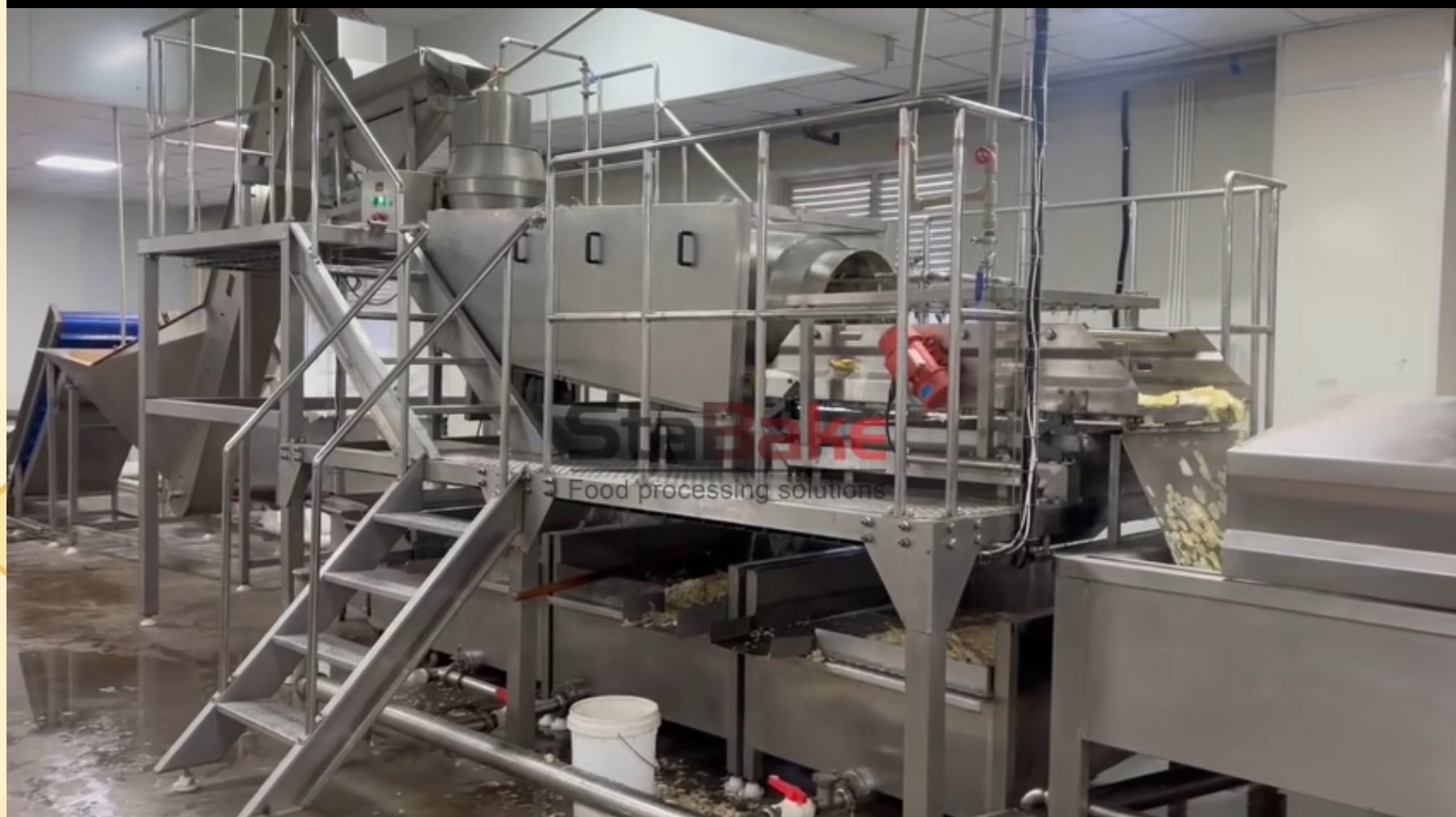
How Automation Level Affects the Price of a Potato Chips Production Line
Differences Between Automatic and Semi-Automatic Potato Chips Production Line
When evaluating a Potato Chips Production Line, automation level shapes both system design and overall cost structure, because it determines how much of the production process relies on machines versus manual labor. A semi-automatic line typically involves operators handling certain stages such as feeding raw materials, transferring products between processes, or monitoring key steps, which keeps the equipment structure simpler and the initial investment lower, but also introduces variability in production speed and product consistency.
By contrast, an automatic Potato Chips Production Line is designed for continuous operation, where each process step is connected through conveyors and controlled systems, allowing the line to run smoothly with minimal human intervention. This type of setup improves production stability, reduces downtime, and ensures that each batch maintains consistent quality in terms of thickness, color, and texture. In Star Bake solutions, automation is integrated across washing, cutting, frying, and packaging stages, which helps create a more efficient and reliable production flow without frequent manual adjustments.
How Automation Reduces Labor but Increases Initial Investment
The level of automation directly shifts how costs are distributed within a Potato Chips Production Line, as higher automation increases equipment investment while reducing dependence on labor. Automated systems require more advanced machinery, including control panels, sensors, and synchronized conveyors, which raises the initial purchase cost and installation complexity, but these systems significantly improve operational efficiency over time.
From a production perspective, automation allows fewer operators to manage the entire line, since most tasks are handled by machines rather than manual input, which helps reduce labor expenses and improve production stability. In addition, automated control of frying temperature, processing time, and seasoning ensures that product quality remains consistent, reducing waste and improving yield, which contributes to better long-term cost efficiency.
Reduced reliance on manual operations
Automation replaces repetitive manual tasks across multiple production stages, allowing operators to focus on monitoring rather than direct handling. This improves efficiency and reduces the risk of human error during processing.
Improved product consistency and quality control
Automated systems maintain stable operating conditions throughout the line, ensuring uniform frying results and consistent product appearance, which enhances brand reliability and reduces rejection rates.
Higher upfront investment in equipment and integration
Advanced automation requires more complex system design, including integrated controls and additional components, which increases the initial cost but provides stronger long-term performance benefits.
Which Automation Level Is More Cost-Effective Long Term
Choosing the right automation level for a Potato Chips Production Line requires balancing short-term budget constraints with long-term operational efficiency, as each option presents different advantages depending on business scale and production goals. Semi-automatic lines are often preferred by businesses with limited initial investment, as they provide flexibility and lower equipment costs, but higher labor requirements can gradually increase operating expenses and limit production scalability.
On the other hand, fully automatic lines are more suitable for operations that prioritize efficiency, consistency, and long-term growth, since continuous production reduces downtime and improves output stability. Although the initial investment is higher, the reduction in labor costs, improved product quality, and lower waste levels often lead to better overall cost performance over time, especially for businesses aiming to expand production capacity.
How Equipment Configuration Influences Potato Chips Production Line Cost
What Machines Are Included in a Full Potato Chips Production Line
When analyzing the cost of a Potato Chips Production Line, equipment configuration is one of the most decisive factors because it defines how complete the production process is and how efficiently each stage operates. A full production line is not just a fryer, but a connected system that transforms raw potatoes into finished packaged products through multiple coordinated steps.
In a standard full configuration, the line includes washing, peeling, sorting, cutting, rinsing, blanching, dewatering, air drying, frying, de-oiling, cooling, seasoning, and packaging. Each machine plays a specific role, and removing or simplifying any step may reduce cost but can also affect product quality, consistency, and production efficiency.
Pre-processing section (washing and peeling)
This stage ensures that raw potatoes are clean and properly prepared before cutting. Efficient cleaning and peeling reduce waste and improve final product appearance, which directly impacts product quality and yield.
Cutting and treatment section (cutting, rinsing, blanching)
This part controls the shape, thickness, and color of the chips. Proper rinsing removes excess starch, while blanching helps maintain color and texture, which are critical for consistent frying results.
Drying and frying section
Air drying removes surface moisture to prevent oil splashing, while the frying system cooks the chips evenly. This section is the core of the Potato Chips Production Line and has a strong influence on both cost and product quality.
Post-processing section (de-oiling, cooling, seasoning, packing)
These steps improve taste, reduce oil content, and prepare the product for market. Packaging, especially when automated, ensures efficiency and product protection during storage and transportation.
The more complete the configuration, the higher the investment, but the line also becomes more efficient and capable of producing consistent, high-quality chips.
How Optional Equipment Changes the Total Investment
Optional equipment can significantly influence the total cost of a Potato Chips Production Line because it allows customization based on product requirements and business goals. While a basic configuration can produce standard chips, additional features are often required to improve product quality, shelf life, and production efficiency.
In practical applications, many buyers choose to add specific equipment to enhance performance or meet market demands. These additions increase the initial investment but often provide long-term benefits in terms of product value and operational efficiency.
Nitrogen filling packaging systems
This feature helps protect chips from breakage and oxidation during storage and transportation. It extends shelf life and improves product appearance, which is especially important for commercial distribution.
Advanced sorting and inspection systems
Additional sorting lines or inspection equipment can remove defective products and ensure uniform quality. This reduces waste and enhances brand consistency in the market.
Extended processing modules
Additional steps such as enhanced drying, cooling, or seasoning systems can improve flavor distribution and texture control. These modules increase the complexity of the line but also improve final product quality.
Optional equipment should be selected based on production goals rather than added without planning. A well-balanced configuration ensures that investment aligns with actual business needs and avoids unnecessary cost increases.
How Frying System and Processing Technology Affect Cost
The frying system is the core component of a Potato Chips Production Line and has a major impact on both equipment cost and operating performance. Different frying technologies and configurations can lead to significant differences in investment, energy consumption, and product quality.
In most production lines, the frying system can be designed with different heating methods, such as electric heating or gas heating, each with its own cost structure and operational characteristics. Electric systems are easier to control and install, while gas systems may offer advantages in large-scale production where energy efficiency becomes more critical.
Heating method selection
Electric heating provides stable temperature control and simpler installation, while gas heating can reduce energy cost in high-capacity production environments. The choice affects both initial setup and long-term operating expenses.
Temperature control and automation
Advanced frying systems include automatic temperature regulation and filtration systems, which help maintain consistent frying conditions. These features improve product quality but also increase equipment cost.
Oil management and filtration systems
Efficient oil filtration extends oil life and improves product taste. Systems with built-in filtration and circulation are more expensive but reduce waste and maintenance over time.
| Frying System Feature | Basic Configuration | Advanced Configuration |
| Heating Method | Standard electric | Electric or gas with optimization |
| Temperature Control | Manual or basic | Automatic and precise |
| Oil Filtration | Limited | Continuous filtration system |
| Product Consistency | Moderate | High |
In Star Bake Potato Chips Production Line solutions, the frying system is designed with adjustable temperature control and optional heating methods, allowing customers to select a configuration that balances cost, efficiency, and product quality according to their specific production requirements.
What Additional Factors Affect the Total Cost of a Potato Chips Production Line
How Installation, Training, and Service Support Add to the Cost
When planning a Potato Chips Production Line, many buyers focus only on equipment price, but service-related costs often take a meaningful share of the total investment. Installation, commissioning, and training are not optional steps. They ensure the line runs correctly and reaches expected production performance.
In real projects, installation is more than placing machines in position. It includes electrical connection, system debugging, and process testing. When engineers are involved on-site, costs increase due to travel, accommodation, and service time. However, proper installation reduces future risks and avoids production delays.
Installation guidance and commissioning
Technical support helps connect each machine into a smooth production flow. Engineers assist in adjusting parameters such as frying temperature and conveyor speed. This ensures the Potato Chips Production Line operates efficiently from the beginning.
Operator training and skill transfer
Training allows workers to understand machine operation and maintenance. Skilled operators reduce downtime and improve production stability. This investment improves long-term efficiency and reduces error-related losses.
After-sales support and technical service
Ongoing support includes troubleshooting, spare parts supply, and process optimization. Reliable service reduces unexpected shutdowns and extends equipment lifespan. This contributes to lower long-term operating costs.
| Service Element | Cost Impact Level | Business Value |
| Installation Support | Medium | Ensures correct setup and stable start |
| Operator Training | Medium | Improves efficiency and reduces errors |
| After-Sales Service | Medium–High | Supports long-term reliability |
In Star Bake projects, service support is designed to help customers move from installation to stable production smoothly, which makes it an essential part of the overall investment rather than an extra expense.
How Raw Materials and Product Requirements Influence Equipment Choice
Raw materials and final product requirements strongly influence the configuration and cost of a Potato Chips Production Line because they determine how each processing step must perform. Potato size, shape, moisture content, and internal composition all affect slicing quality, frying behavior, and final product appearance.
For example, potatoes with uneven size or higher sugar content may require more precise sorting and processing control. This can lead to the need for additional equipment or more advanced systems, which increases the total investment. At the same time, different product targets such as standard chips, thicker cuts, or alternative vegetable chips may require adjustments in cutting, blanching, and frying processes.
Raw potato quality and consistency
Uniform size and proper composition help achieve stable slicing and frying results. Variations in raw materials may require additional processing steps or stricter control systems. This can increase both equipment complexity and cost.
Product specification requirements
Thickness, texture, and color standards affect machine selection. More precise cutting and processing systems are needed for high-quality products. This leads to higher equipment investment but improves market competitiveness.
Product variety and flexibility
Producing different types of chips, such as sweet potato or plantain chips, may require adaptable configurations. Flexible systems often include adjustable settings and additional modules. These features increase cost but allow broader product offerings.
Conclusion
Cost depends on capacity, automation, configuration, and service. Smart choices balance investment and efficiency over time. Star Bake offers flexible Potato Chips Production Line solutions that improve quality, reduce labor, and support stable, scalable production.
FAQ
Q: What affects the cost of a Potato Chips Production Line?
A: Capacity, automation, and configuration drive price differences.
Q: How to choose a Potato Chips Production Line capacity?
A: Match output needs and future business growth plans.
Q: Why automation increases Potato Chips Production Line cost?
A: Advanced systems reduce labor but raise initial investment.
Q: Does raw material affect Potato Chips Production Line cost?
A: Yes, potato quality changes equipment and process requirements.
Q: Is a fully automatic Potato Chips Production Line worth it?
A: It improves efficiency and lowers long-term operating costs.


