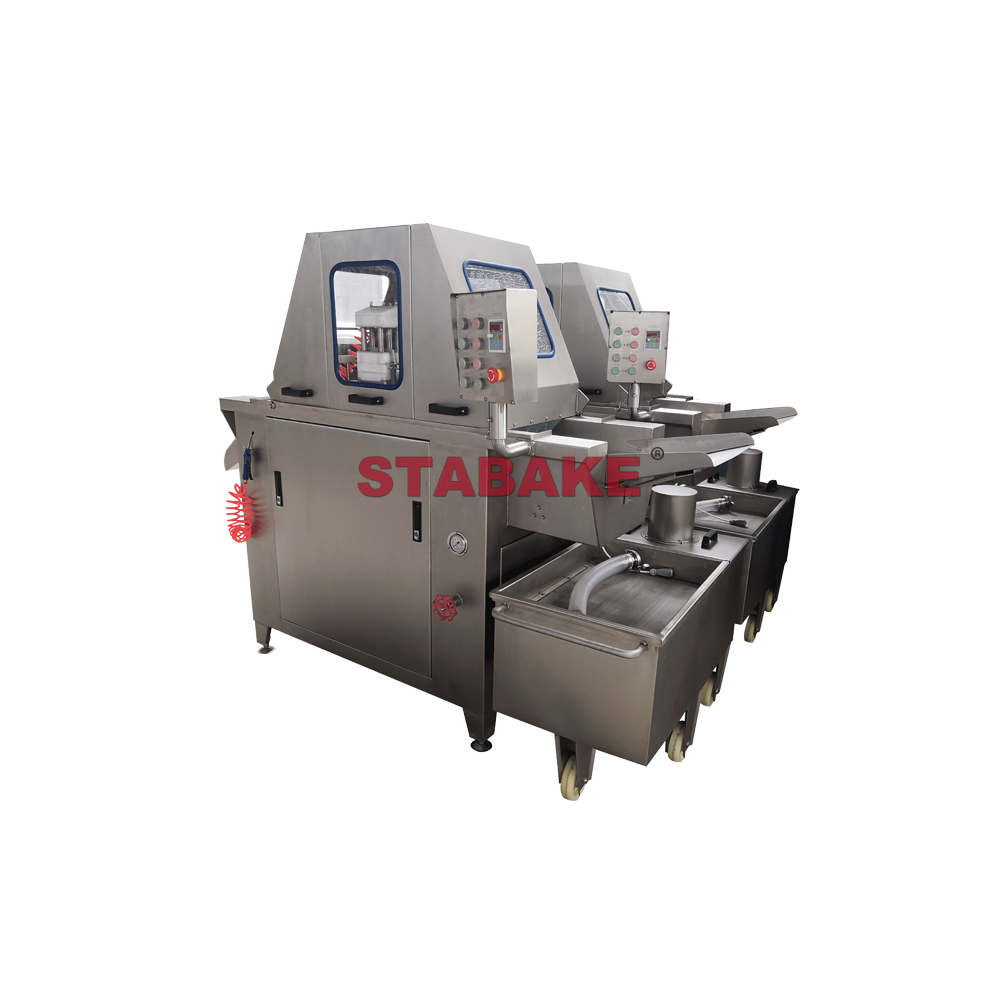
Mismatched primary breakdown machinery directly causes yield degradation, excessive labor costs, and severe downstream production delays. Plant managers constantly face operational friction when deciding between standalone primary processing equipment—such as band saws, cutters, and tenderizers. You must determine exactly when your current throughput justifies upgrading to integrated, automated systems. Selecting the wrong machine creates immediate bottlenecks. It starves downstream equipment and reduces your overall margin.
This technical evaluation framework assesses meat cutters, band saws, and tenderizers based on product specifications like bone-in, boneless, or cooked states. You will learn how to analyze volume requirements and facility footprints. We also cover how to assess your readiness to feed into advanced automated workflows, such as a continuous meatball processing line. By matching the right equipment to your raw material, you optimize yield and prepare your facility for scalable growth.
Match Equipment to Raw Material: Band saws are mandatory for bone-in or deep-frozen cuts, while industrial meat cutters and slicers optimize yield for fresh, tempered, and cooked boneless products.
Mechanical Tenderization Drives Margin: Utilizing commercial tenderizers reduces manual labor while upgrading lower-tier muscle cuts into consistent, high-value products ready for vacuum tumbling and marination.
Primary Processing Feeds Automation: The efficiency of standalone breakdown equipment directly dictates the performance and consistency of downstream automated systems, such as a high-capacity meatball processing line.
Durability as a One-Time Investment: Long-term ROI relies on corrosion-resistant materials, hygienic design (IP69K ratings, toolless disassembly), and the availability of consumable parts rather than upfront capital expenditure.
Table of Contents
Toggle
Start with Your Meat Processing Requirements
You must establish baseline metrics before evaluating any specific machine. Processing plants need to audit their current operational limits to identify exact bottlenecks. Without hard data, equipment upgrades often fail to deliver expected returns. You need to know your exact numbers regarding intake, output, and waste.
Volume, Yield, and Throughput Demands
Define your acceptable yield loss percentages during primary breakdown. Every ounce of meat lost to bone dust or improper slicing reduces profitability. Calculate your required pounds-per-hour throughput accurately. This calculation prevents downstream starvation. If your primary cutter processes 500 pounds per hour but your mixer requires 1,000, you have a critical bottleneck. You must track the exact weight of raw material entering the cutting room versus the usable product exiting it. A 2% yield loss on a 10,000-pound daily run equals 200 pounds of wasted product every single shift. Over a year, that loss destroys your operating margin.
Facility Footprint and Scale
Evaluate your spatial constraints carefully. Determine if compact meat cutting machines are necessary for smaller processing rooms. Alternatively, assess if your facility can accommodate industrial-grade, high-footprint equipment. Floor space directly dictates machine selection. You must account for operator movement, raw material staging, and sanitation clearances. High-capacity machines require wider aisles for forklift access and pallet jacks. Washdown procedures demand at least three feet of clearance around every machine to prevent cross-contamination from splash-back. Do not buy a machine that barely fits your room; buy one that fits your workflow.
Product Specifications and Future Roadmaps
Analyze the ratio of bone-in versus boneless processing in your daily operations. This ratio dictates whether you need heavy-duty saws or precision slicers. Assess your strategic shift toward value-added products. Transitioning from primal cuts to formed products often requires specialized downstream equipment. You must plan for future capabilities today. If your long-term goal involves producing formed patties or links, your primary breakdown equipment must be capable of feeding a grinder without smearing the fat. Plan your equipment purchases around where your product line will be in five years, not just what you are cutting today.
Equipment Type
Ideal Raw Material
Primary Function
Downstream Application
Commercial Band Saw
Bone-in, deep-frozen blocks, carcasses
Heavy-duty breakdown and portioning
Primal separation, frozen block reduction
Industrial Meat Cutter
Fresh, tempered, cooked boneless meats
Precision slicing and portion control
Retail packaging, uniform grinder feed
Mechanical Tenderizer
Tough muscle cuts, boneless steaks
Connective tissue breakdown
Vacuum tumbling, marination, value-add
Commercial Meat Band Saws for Bone-In and Frozen Cuts
Band saws serve as the foundational breakdown tool in most meat processing facilities. They handle the toughest materials that would destroy standard cutting blades. You rely on them for the initial reduction of large carcasses and frozen blocks.
Core Capabilities and Ideal Use Cases
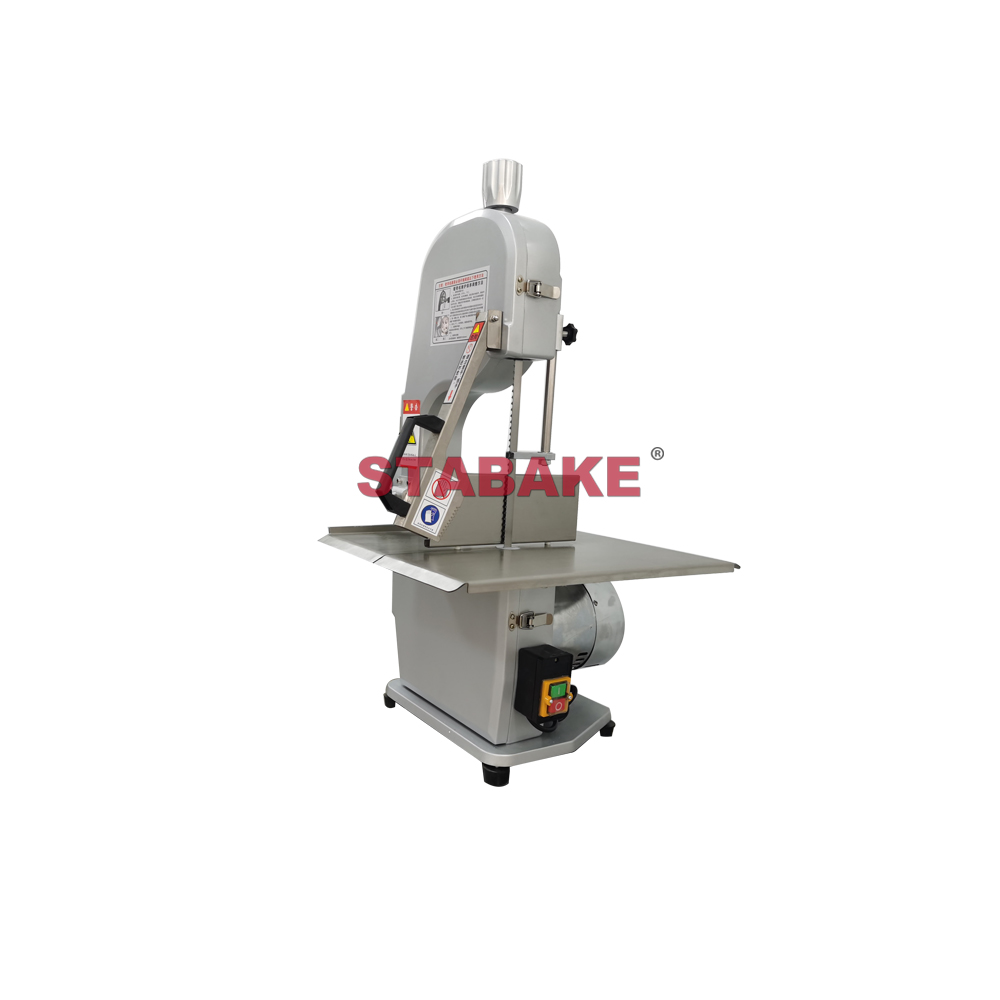
Band saws are absolutely necessary for frozen blocks, heavy bone-in primals, and full carcass breakdown. They power through dense bone and ice effortlessly. However, band saws have strict limitations for delicate, boneless portioning. Using a saw on fresh boneless meat causes excessive bone dust and severe yield loss. You must restrict saw usage to appropriate materials. Processing deep-frozen blocks at -18°C requires a saw with aggressive tooth profiles. Attempting to cut tempered meat with the same aggressive blade tears the muscle fibers and degrades the appearance of retail cuts.
Evaluation Dimensions: Motor Power and Blade Speed
A powerful motor is non-negotiable for industrial applications. Higher horsepower translates directly to faster, more efficient cuts through dense materials. Weak motors stall, causing jagged cuts and safety hazards. Direct-drive motors offer better torque consistency compared to belt-driven models. Variable blade speeds impact cut quality significantly. Adjusting speed reduces thermal damage to the meat during heavy processing. High blade speeds work best for frozen products, while slower speeds prevent bone burning on fresh bone-in cuts. You must match the blade speed to the specific density of the product you are processing.
Implementation Realities and Safety Compliance
Safety features are mandatory, not optional. You must require electronic braking systems, pusher plates, and sensor-based safety interlocks. These features prevent catastrophic operator injuries. Address the operator training burden immediately. Operators need rigorous training on safe handling techniques. You must also account for the ongoing maintenance of stainless-steel blade replacement and proper tension calibration. A loose blade wanders during a cut, creating uneven portions and increasing the risk of the blade snapping. Implement a strict daily inspection protocol for blade tension mechanisms and wheel scrapers to maintain optimal cutting performance.
Industrial Meat Cutters and Slicers for Precise Portions
When dealing with boneless products, precision becomes your primary objective. Industrial cutters maximize the value of every single primal cut. They eliminate the guesswork from portioning and ensure uniform product sizing.
Differentiating Cutters from Saws
Cutters and slicers are engineered specifically for tempered, fresh, or fully cooked boneless meats. They offer exact weight and thickness control. A band saw would cause unacceptable product damage in these scenarios. Cutters use smooth or scalloped rotary blades to slice cleanly through muscle fibers. This clean cutting action preserves moisture and texture. Slicing tempered meat at -2°C provides the ideal firmness for clean cuts without the cellular damage caused by deep freezing. You must maintain strict temperature control in your cutting room to maximize the performance of these machines.
Features-to-Outcomes: Consistency in High-Volume Runs
Automated meat cutters utilize optical scanning or volumetric measuring to maximize yield per primal. These systems scan the meat and adjust slice thickness dynamically. This technology drastically reduces giveaway in retail packaging. Overweight portions destroy profit margins over thousands of cycles. Precision cutters ensure every package meets exact weight specifications. If your target weight is 8 ounces, an automated cutter ensures you do not consistently pack 8.5 ounces. That half-ounce difference dictates whether your processing run is profitable or operating at a loss.
Integration into Automated Workflows
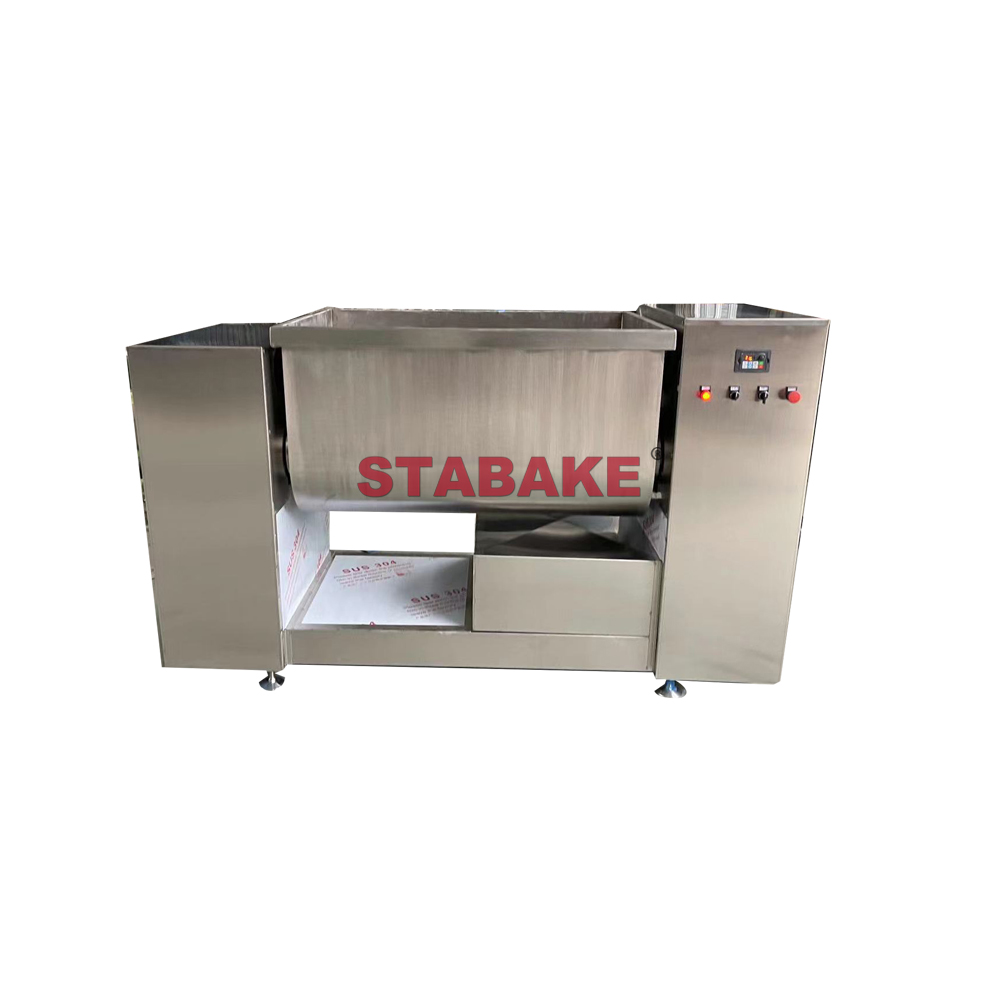
Precision cutters prepare highly uniform raw material. This uniformity is a strict prerequisite for feeding consistent batches into downstream equipment. Grinders, vacuum tumblers, and meat mixers require consistent input sizes to function optimally. Uneven chunks lead to poor fat distribution and inconsistent final products. When feeding a grinder, large irregular chunks cause the auger to work harder, generating excess heat. This heat smears the fat, ruining the texture of the final product. Uniform cubes from an industrial cutter ensure a steady, cool feed rate into the grinding system.
Commercial Meat Tenderizers for Better Texture and Higher Value
Mechanical tenderization transforms low-value muscle cuts into premium products. It is a highly effective method for increasing overall plant profitability. You can take tough, inexpensive cuts and process them into high-margin items.
How Mechanical Tenderization Impacts Product Quality
Rotary blade tenderizers and needle-injector tenderizers break down connective tissue effectively. They achieve this without destroying the underlying muscle integrity. The blades sever tough fibers, making the meat easier to chew. This process offers compounding benefits when paired with vacuum tumblers. Tenderized meat features significantly higher marinade absorption rates and requires much shorter processing times. The micro-cuts created by the tenderizer act as channels for brines and marinades to penetrate deep into the muscle core. This increases your cooked yield and enhances the flavor profile of the final product.
Labor Savings vs. Equipment Cost Trade-offs
Mechanical tenderization offers massive throughput advantages over manual mallet or jacquard methods. A single machine processes hundreds of pounds per hour. This automation creates a far more consistent end product than manual labor. You must evaluate the sanitation challenges of tenderizer blade assemblies carefully. Always select machines with easy-removal designs to ensure thorough daily cleaning. Needle assemblies trap meat proteins and fat. If operators cannot easily remove and inspect the stripper plates and needle blocks, biofilm will develop. Prioritize equipment that allows toolless disassembly of the entire tenderizing head.
When to Upgrade to a Meatball Processing Line
Primary breakdown equipment does not operate in a vacuum. It serves as the critical starting point for advanced automated systems. The quality of your initial cuts dictates the success of your entire production run.
The Role of Primary Processing in Downstream Automation
The output from band saws and meat cutters serves as the raw input for secondary processing ecosystems. Grinders, mixers, and stuffers rely entirely on this initial feed. Inconsistent primary cuts lead directly to uneven grinding. Poor grinding degrades the texture, alters the fat-to-lean ratio, and destroys the forming capability of a meatball processing line. Precision at the start guarantees quality at the end. If your primary cutter produces long, stringy pieces instead of clean cubes, those strings will wrap around the grinder knife. This causes the meat to mash through the hole plate rather than cutting cleanly, resulting in a dense, rubbery final product.
Transitioning from Standalone Machines to Integrated Systems
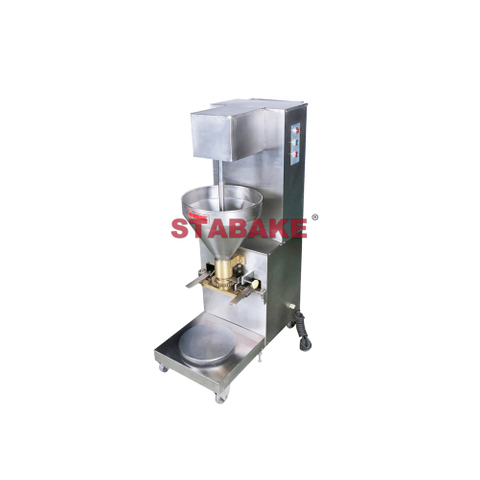
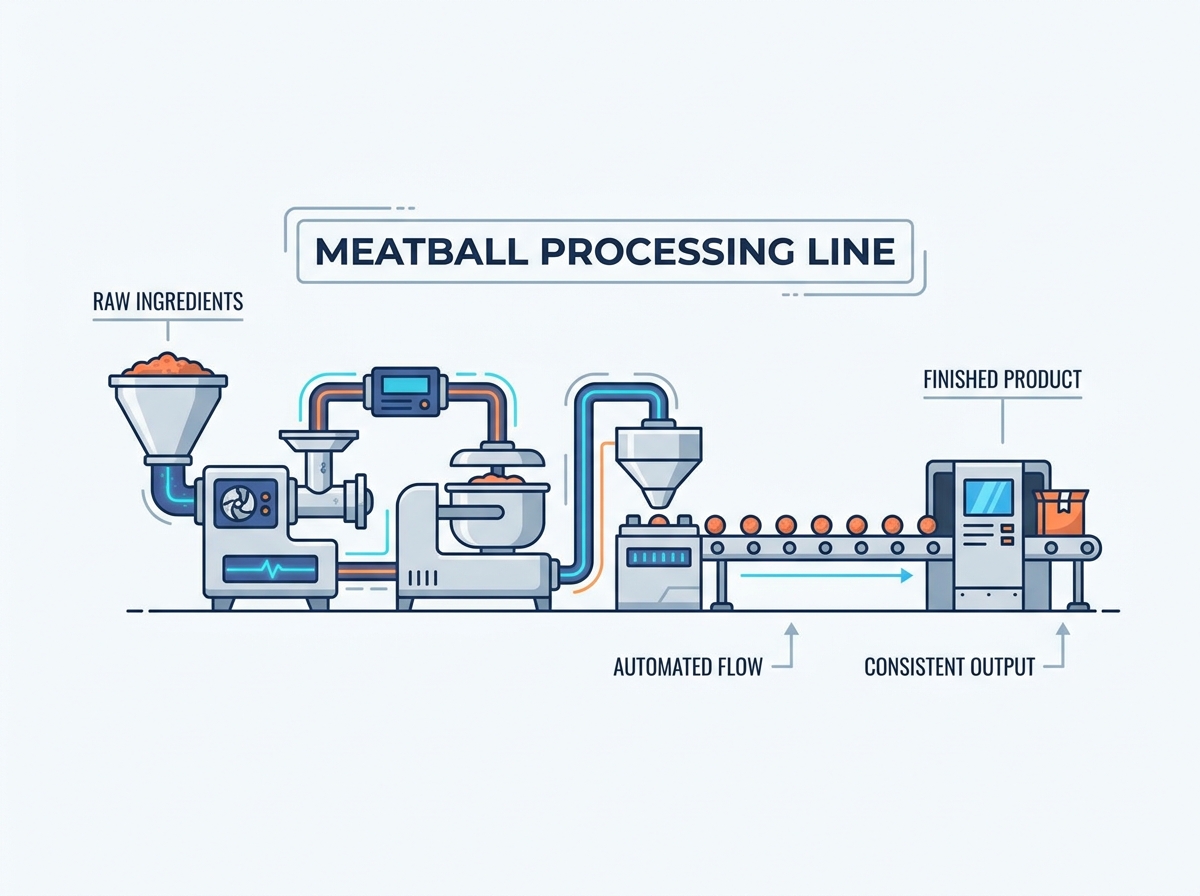
Identify your operational tipping point accurately. Volume thresholds and severe labor shortages often dictate when manual transfer between standalone machines fails. A continuous meatball processing line integrates grinding, mixing, forming, and cooking into one seamless workflow. Your primary equipment must match this intake capacity perfectly to prevent system-wide bottlenecks. If your forming machine can produce 2,000 portions per hour, your primary cutters and grinders must supply a continuous flow of perfectly mixed meat to the hopper. Any interruption in the feed causes the forming machine to produce underweight or malformed products.
Evaluating ROI on Full Line Automation
Assess the labor reallocation benefits carefully when moving from manual portioning to an automated meatball processing line. Automation allows you to move workers from repetitive cutting tasks to quality control roles. Discuss the footprint requirements early in the planning phase. Integrated lines require significant utility upgrades, including dedicated power, high-volume water access, and specialized floor drainage. You must ensure your facility has the electrical capacity to run multiple heavy-duty motors simultaneously. You also need sufficient hot water supply to sanitize a massive continuous belt system at the end of the shift.
How to Evaluate Meat Processing Equipment for Hygiene and Compliance
Industrial meat processing environments are harsh. Equipment must withstand extreme cleaning protocols while maintaining strict food safety standards. You cannot compromise on hygienic design.
Washdown Ratings and Hygienic Design Standards
You must prioritize 304 or 316 stainless steel construction for all primary equipment. Continuous welds eliminate crevices where bacteria multiply. IP69K-rated electrical enclosures are mandatory for surviving daily high-pressure, high-temperature washdowns. Poorly designed band saw wheels or tenderizer combs present severe risks of bacterial harborage. Toolless disassembly is critical for effective sanitation. Operators must be able to strip the machine down to its bare frame without using wrenches or screwdrivers. Any bolted guard or fixed panel in the product zone will eventually harbor pathogens. Look for sloped surfaces that prevent water pooling and open-channel frames that allow visual inspection after cleaning.
Durability and Maintenance Considerations
Frame primary processing equipment as a one-time foundational investment. Durability and corrosion-resistant designs prevent premature replacement and costly downtime. Evaluate the availability of OEM parts and domestic technical support before purchasing. Relying on overseas shipping for a critical band saw blade halts production entirely. Establish a rigorous preventative maintenance schedule for all moving parts. Lubricate bearings daily with food-grade grease. Inspect drive belts for fraying and replace them before they snap during a production run. A well-maintained machine operates safely and delivers consistent yields for decades.
Conclusion
Choosing the right meat processing equipment is not simply about purchasing an individual machine. It requires building a reliable production workflow that supports current output targets while remaining ready for future automation.
Stabake is a food processing equipment manufacturer based in Jinan, China, providing standalone machines and automated processing lines for meat and other food applications. With support covering project planning, machine selection, installation, commissioning, and maintenance, Stabake helps processors match equipment capacity, hygiene requirements, and downstream integration with their long-term production goals.
Conduct a rigorous throughput audit of your current primary processing equipment to identify exact bottlenecks and capacity limits.
Calculate your exact yield loss percentages to justify the purchase of precision cutting machinery.
Request detailed technical spec sheets and live equipment demos from manufacturers using your specific raw materials.
Map out your floor space and utility capacities to ensure compatibility with future automated workflows.
Establish a daily preventative maintenance and sanitation protocol for all new equipment to ensure long-term reliability.
FAQ
Q: What is the difference between a commercial meat band saw and a meat cutter?
A: Band saws use a continuous toothed blade driven by a powerful motor, designed specifically for bone-in and deep-frozen meats. Meat cutters use rotary or oscillating blades for precise, portion-controlled slicing of fresh, tempered, or cooked boneless meats without causing product damage.
Q: When should a processing plant invest in a meatball processing line?
A: Investment is justified when production volumes exceed manual forming capacities or when product consistency issues arise. It is also necessary when scaling up value-added product lines requires continuous grinding, mixing, and forming automation to meet market demand.
Q: How do mechanical meat tenderizers improve processing efficiency?
A: They replace labor-intensive manual tenderizing and ensure uniform breakdown of muscle fibers for consistent cooking. They also significantly increase the absorption rates of marinades and brines, especially when paired with vacuum tumblers.
Q: What safety features are mandatory for industrial meat band saws?
A: Look for electronic motor braking that stops the blade in under 2 seconds. You also need interlocked doors that prevent operation when open, pusher plates to keep hands away from the blade, and prominent, easily accessible emergency stop buttons.
Q: How does primary meat cutting equipment affect a meatball processing line?
A: Primary equipment dictates the size and temperature of the meat entering the grinder. Inconsistent chunks from poor cutting can cause grinder smearing, which ruins the fat-to-lean ratio and degrades the final texture and forming capability.