The global meat processing industry has experienced significant transformation over the past few decades, driven by rising consumer demand for protein rich foods, stricter food safety regulations, and the need for greater operational efficiency. According to industry reports, the global meat processing equipment market is projected to reach over USD 20 billion by 2030, reflecting the growing investment in automation and modern processing technologies. Whether operating a small scale butcher shop or a large scale industrial processing plant, having the right equipment is fundamental to maintaining product quality, ensuring food safety compliance, and maximizing throughput.
Meat processing involves a series of complex operations including grinding, slicing, mixing, stuffing, cutting, tenderizing, packaging, smoking, and chilling. Each stage requires specialized machinery designed to handle specific tasks with precision and consistency. Without the proper equipment, processors risk compromising product quality, increasing labor costs, violating food safety standards, and ultimately losing their competitive edge in an increasingly crowded marketplace.
The 10 must have meat processing equipment for efficient production are industrial meat grinder, meat slicer, meat mixer and blender, sausage stuffer, band saw, meat tenderizer, vacuum packaging machine, bowl chopper, smokehouse, and blast chiller. These machines collectively cover the entire processing workflow from raw material preparation to final product storage, ensuring that every stage meets industry standards for quality, safety, and productivity.
Choosing the right combination of equipment can dramatically improve processing efficiency, reduce waste, enhance product consistency, and ensure compliance with stringent food safety regulations such as HACCP and USDA requirements. Each piece of equipment serves a distinct purpose in the processing chain, and understanding their functions, benefits, and selection criteria is essential for any meat processing operation aiming to scale and optimize production.
In the following sections, we will explore each of these 10 essential pieces of meat processing equipment in detail, examining their core functions, key features to look for, and how they contribute to an efficient and profitable processing operation.
An industrial meat grinder is the foundational piece of equipment in any meat processing facility, designed to grind and mince large quantities of meat into uniform particles at high speed, making it indispensable for producing ground meat products such as sausages, burgers, patties, and meatballs.
Core Functions and Working Principle
The industrial meat grinder operates by feeding boneless meat through a hopper into a rotating auger, which pushes the meat through a series of cutting plates and blades. The size of the ground particles is determined by the hole diameter of the cutting plate, which can be easily swapped to produce different grind sizes for various end products. Modern grinders are typically constructed from stainless steel to meet food safety standards and are available in capacities ranging from a few hundred kilograms per hour for small operations to several thousand kilograms per hour for large scale industrial facilities.
The grinding mechanism consists of several key components working in harmony. The feed screw, also known as the auger, rotates within a barrel to transport meat from the hopper toward the cutting head. At the cutting head, a knife or set of knives rotates against the cutting plate, shearing the meat into precise particles. The design of the knife, the sharpness of the blade, and the tolerance between the knife and plate all significantly affect the texture and quality of the ground meat.
Key Features to Consider
When selecting an industrial meat grinder, several factors must be evaluated to ensure it meets the specific needs of the processing operation:
Processing capacity: Measured in kilograms per hour, this determines how much meat the grinder can handle within a given timeframe. Higher capacity machines are essential for large scale operations.
Motor power: Typically ranges from 1.5 kW to over 15 kW. More powerful motors can handle tougher cuts of meat and maintain consistent grinding speed under heavy loads.
Cutting plate options: Multiple plate sizes allow for flexibility in producing different grind textures, from coarse to fine.
Safety features: Look for emergency stop buttons, safety guards, and interlock systems that prevent operation when components are improperly assembled.
Ease of cleaning: Removable parts, smooth surfaces, and tool less disassembly are critical for maintaining hygiene and complying with food safety regulations.
Impact on Production Efficiency
A high quality industrial meat grinder can significantly enhance production efficiency by reducing processing time, minimizing meat temperature rise during grinding (which affects product safety and shelf life), and producing consistent particle sizes that improve downstream processing. Uniform grind size is particularly important for products like sausages, where inconsistent particles can lead to uneven texture, poor binding, and visual defects in the final product.
Common Applications
Product Type
Recommended Grind Size
Typical Plate Diameter
Fresh sausages
Medium to fine
4 to 6 mm
Hamburger patties
Medium
6 to 8 mm
Meatballs
Fine
3 to 5 mm
Salami and dry cured products
Coarse to medium
8 to 12 mm
Pet food
Coarse
10 to 20 mm
2. Meat Slicer
A meat slicer is a precision cutting machine designed to slice meat, cheese, and other deli products into uniform portions at high speed, ensuring consistent product presentation, accurate portion control, and reduced labor costs in both retail and industrial meat processing environments.
Types of Meat Slicers
Meat slicers come in several configurations, each suited to different production scales and product types. Gravity feed slicers are the most common design, where the product carriage is angled to allow gravity to assist in feeding the meat toward the rotating blade. This design is widely used in delis, supermarkets, and small to medium processing facilities. Vertical feed slicers, on the other hand, use a more upright orientation and are often employed for larger products or when maximum yield is required.
For industrial scale operations, automatic slicers with conveyor systems can handle continuous high volume slicing with minimal operator intervention. These machines can be programmed to produce specific slice thicknesses, stack patterns, and portion weights, making them ideal for packaged meat products sold in retail environments. Some advanced models also integrate portion weighing and automatic loading systems for fully automated production lines.
Critical Selection Criteria
Choosing the right meat slicer involves evaluating multiple factors that affect both product quality and operational efficiency:
Blade diameter and material: Larger blades can accommodate bigger product pieces, while high quality stainless steel blades maintain sharpness longer and resist corrosion.
Slice thickness range: Most slicers offer adjustable thickness from 0.5 mm to over 25 mm, providing flexibility for different product lines.
Production rate: Measured in slices per minute, this determines the throughput capacity. Industrial slicers can produce hundreds of slices per minute.
Hygiene design: Look for models with IP65 or higher rated enclosures, removable product carriages, and minimal horizontal surfaces where bacteria can accumulate.
Product versatility: Some slicers can handle not only cooked and raw meats but also cheeses, vegetables, and other products, offering greater flexibility for diverse product portfolios.
Benefits for Production Efficiency
The implementation of a quality meat slicer delivers multiple efficiency benefits. First, precise portion control directly impacts profitability by ensuring that each slice meets exact weight specifications, reducing give away and improving yield. Second, consistent slice thickness improves visual appeal and consumer satisfaction, which is critical for branded products. Third, automated slicing dramatically reduces labor requirements compared to manual cutting, allowing staff to be reassigned to other value adding tasks.
Maintenance Considerations
Regular blade sharpening is essential for maintaining slice quality and preventing product tearing. Dull blades not only produce ragged, inconsistent slices but also require more force to cut, which can strain the motor and create safety hazards. Most industrial slicers include built in sharpening stations or can be fitted with external sharpening attachments. Daily cleaning and sanitization of all product contact surfaces are mandatory to prevent cross contamination and comply with HACCP requirements.
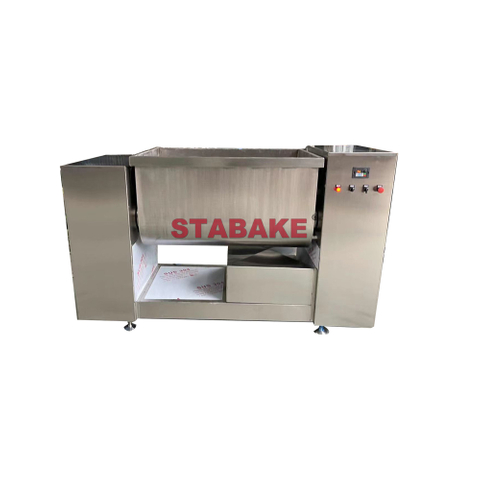
3. Meat Mixer and Blender
A meat mixer and blender is a versatile machine designed to thoroughly combine ground meat with spices, seasonings, additives, water, and other ingredients to achieve a uniform and consistent mixture, which is critical for producing high quality sausage, meatball, and other processed meat products.
Mixing Mechanism and Design
Meat mixers typically use one of several mixing configurations: paddle mixers, ribbon mixers, or planetary mixers. Paddle mixers use rotating paddles within a trough or bowl to fold and blend ingredients gently, making them ideal for coarse ground products where maintaining meat particle integrity is important. Ribbon mixers employ a helical ribbon that moves material in multiple directions simultaneously, achieving rapid and thorough blending for finer products.
The mixing bowl or trough is usually constructed from food grade stainless steel and may be jacketed for temperature control. Temperature management during mixing is crucial because the mechanical action generates heat, which can cause fat smearing, protein denaturation, and bacterial growth. Jacketed bowls that circulate chilled water or glycol help maintain the meat temperature at optimal levels, typically between 0 and 4 degrees Celsius, throughout the mixing process.
Key Operational Parameters
Several parameters influence the quality and consistency of the final mix, and understanding these factors is essential for optimizing production:
Parameter
Impact on Product Quality
Recommended Range
Mixing time
Insufficient time causes uneven seasoning distribution; excessive time causes fat smearing and texture damage
3 to 8 minutes depending on product
Mixing speed
Higher speeds improve blending efficiency but increase heat generation
20 to 60 RPM for paddle mixers
Meat temperature
Higher temperatures lead to fat melting and poor binding
Modern meat mixers offer a range of advanced features that enhance both product quality and operational efficiency. Vacuum mixing capabilities remove air from the mixture during blending, which improves color stability, extends shelf life, and creates a tighter, more compact product texture. This is particularly important for emulsion type sausages where air pockets can cause defects and reduce product quality.
Programmable logic controllers allow operators to store and recall mixing recipes, ensuring consistent results across batches and shifts. These systems can control mixing time, speed, vacuum level, and temperature automatically, reducing the risk of human error and enabling precise replication of product specifications. Some models also feature automatic ingredient dosing systems that add precise amounts of liquids and seasonings at predetermined intervals during the mixing cycle.
Selecting the Right Capacity
Mixer capacity should be matched to the production volume and batch frequency. Undersized mixers create bottlenecks in the production line, while oversized mixers result in underutilization and increased capital costs. A general rule is to select a mixer whose capacity aligns with the output of the preceding grinder, allowing for continuous workflow without excessive waiting time between batches.
4. Sausage Stuffer
A sausage stuffer is a specialized machine designed to fill casings with ground or emulsified meat mixtures at controlled pressures and speeds, producing uniform sausages with consistent weight, density, and appearance for both fresh and cooked sausage products.
Types of Sausage Stuffers
Sausage stuffers are available in several configurations to suit different production scales and product types. Manual stuffers, which use a hand crank to push meat from a cylinder through a stuffing horn, are suitable for small operations and artisanal producers. These machines offer simplicity and low cost but are limited in throughput and consistency compared to powered alternatives.
Pneumatic and hydraulic stuffers use compressed air or hydraulic pressure to drive the meat through the stuffing horn, providing more consistent pressure and higher throughput. These machines are the workhorses of medium to large scale sausage production and can be equipped with portioning systems that automatically cut or link sausages to precise lengths and weights. For the largest industrial operations, continuous vacuum stuffers feed meat directly from a hopper through a pumping system, enabling uninterrupted production at rates of several thousand kilograms per hour.
Critical Performance Factors
The performance of a sausage stuffer directly affects product quality and production efficiency. Several factors must be carefully controlled:
Stuffing pressure: Excessive pressure can rupture casings and create dense, rubbery sausages, while insufficient pressure results in loose, inconsistent filling.
Filling speed: Must be matched to the operator's or linking machine's ability to manage the output. Too fast causes casing breakage; too slow reduces throughput.
Meat temperature: The meat mixture must remain cold during stuffing to prevent fat separation and ensure proper binding.
Horn size selection: The stuffing horn diameter must match the casing size to prevent air pockets and ensure smooth filling.
Vacuum capability: Vacuum stuffers remove air from the meat during filling, improving product compactness, color, and shelf life.
Portioning and Linking Systems
Modern industrial sausage stuffers often integrate portioning and linking mechanisms that automate the formation of individual sausage units. These systems can produce sausages with weight accuracy of plus or minus 1 percent, dramatically reducing product give away compared to manual portioning. Linking systems can create sausages in natural, collagen, or synthetic casings, with some models capable of producing both straight and curved sausages.
The integration of portioning with stuffing provides significant efficiency advantages. By eliminating the need for separate weighing and cutting operations, these systems streamline production, reduce labor costs, and improve product consistency. Some advanced models also feature automatic casing loading and tying mechanisms, further reducing manual intervention.
Product Type and Stuffer Selection
Product Type
Recommended Stuffer Type
Key Feature Needed
Fresh sausages in natural casings
Hydraulic with linking
Gentle pressure control
Emulsion sausages (hot dogs)
Continuous vacuum stuffer
High speed with vacuum
Dry fermented sausages
Pneumatic with portioning
Precise weight control
Large caliber sausages
Hydraulic with large horn
High volume capacity
5. Band Saw
A band saw is a powerful cutting machine that uses a continuous toothed blade to cut through bone, frozen meat, and large primal cuts with precision and speed, making it an essential tool for portioning meat in both small butcher shops and large industrial processing facilities.
Construction and Blade Technology
The band saw consists of a continuous loop of toothed steel blade that runs over two or more wheels, creating a vertical or horizontal cutting surface. The blade moves at high speed, allowing it to slice through bone and frozen meat with minimal waste and clean cuts. Industrial band saws are constructed with heavy duty stainless steel frames, sealed bearings, and food grade components to withstand the demanding environment of meat processing facilities.
Blade selection is critical to achieving optimal cutting performance. The pitch of the blade must be matched to the material being cut. For boneless meat, fine pitch blades produce clean, smooth cuts with minimal product loss. For bone in cuts, coarser pitch blades are needed to cut through bone without damaging the blade or stalling the motor. Frozen meat requires specialized blades with hardened teeth that can penetrate frozen tissue without chipping or breaking.
Safety and Operational Considerations
Band saws are inherently dangerous machines, and safety must be a primary concern in their operation and selection. All industrial band saws should be equipped with blade guards that cover the unused portion of the blade, automatic blade tension monitoring, and emergency stop mechanisms. The cutting table should have a pusher plate to keep the operator's hands away from the blade during cutting.
Proper blade tension is essential for both cutting performance and safety. Insufficient tension causes blade wandering and poor cut quality, while excessive tension can cause blade breakage, creating a significant safety hazard. Modern band saws include automatic tensioning systems that maintain optimal blade tension and alert operators when blades need replacement.
Efficiency and Yield Benefits
Band saws contribute to production efficiency in several important ways. First, they enable precise portioning of primal cuts into retail ready portions with consistent weight and appearance. This precision reduces product give away and improves yield, directly impacting profitability. Second, the clean cuts produced by a properly maintained band saw minimize product damage and trim loss, maximizing the usable yield from each primal cut.
Third, band saws can process frozen meat blocks, allowing facilities to work with frozen raw materials without thawing them first. This capability reduces refrigeration costs, minimizes drip loss associated with thawing, and provides greater flexibility in raw material sourcing and inventory management.
Blade Maintenance Schedule
Maintenance Task
Frequency
Importance
Blade tension check
Daily before operation
Critical for cut quality and safety
Blade tracking adjustment
Daily
Prevents blade derailment
Blade sharpening
Every 4 to 8 hours of use
Maintains cut quality
Blade replacement
When sharpening no longer restores performance
Prevents product damage and safety hazards
Wheel and guide cleaning
Daily after operation
Prevents contamination and maintains alignment
6. Meat Tenderizer
A meat tenderizer is a machine designed to improve the tenderness and palatability of meat by mechanically breaking down muscle fibers and connective tissues, enabling processors to upgrade lower grade cuts to higher value products and meet consumer expectations for consistent eating quality.
Mechanical Tenderizing Methods
There are several approaches to mechanical meat tenderization, each using different mechanisms to achieve the desired effect. Blade tenderizers use arrays of thin, sharp blades or needles that pierce the meat, severing muscle fibers and connective tissue without significantly damaging the overall structure. This method is widely used for beef cuts such as sirloin and round steaks, where it can dramatically improve tenderness while maintaining the visual appeal of the cut.
Hammer or mallet style tenderizers use mechanical force to physically pound the meat, flattening it and breaking down tough fibers. This method is more aggressive and is typically used for cuts destined for schnitzel, cube steak, and similar products. Cube tenderizers, also known as cubers or needlers, use a combination of blades and crushing rollers to create a distinctive pattern on the meat surface while tenderizing it throughout.
Value Enhancement Through Tenderizing
The economic benefits of meat tenderizing are substantial. By improving the tenderness of lower grade or less desirable cuts, processors can effectively upgrade these cuts to compete with premium cuts in the marketplace. This value enhancement can significantly increase the overall profitability of a processing operation by maximizing the value extracted from every carcass.
Beyond tenderness improvement, mechanical tenderizing also offers functional benefits for further processing. Tenderized meat absorbs marinades and seasonings more effectively due to the increased surface area and disrupted muscle structure created by the tenderizing process. This results in more flavorful products and can reduce the amount of seasoning required, providing additional cost savings.
Food Safety Considerations
Blade tenderizing introduces a potential food safety risk that must be carefully managed. When blades pierce the meat surface, they can transfer surface bacteria into the interior of the cut, where cooking temperatures may not be sufficient to eliminate them. This is particularly concerning for whole muscle cuts that are typically cooked to lower internal temperatures than ground products.
To mitigate this risk, processors must implement strict hygiene protocols. Tenderizing blades must be thoroughly cleaned and sanitized between batches, and only clean, surface treated meat should be tenderized. Some facilities also apply antimicrobial treatments before tenderizing to reduce bacterial loads on the meat surface. Additionally, products that have been mechanically tenderized should be labeled accordingly to ensure that consumers and food service operators cook them to appropriate internal temperatures.
Tenderizer Selection Guide
Cut Type
Recommended Tenderizer
Blade Configuration
Beef sirloin steaks
Blade tenderizer
Thin needles, 2 to 3 mm penetration depth
Beef round roasts
Blade tenderizer
Dual pass, 4 mm blades
Pork cutlets
Hammer style
Flat or pyramid surface
Veal and poultry scaloppini
Hammer style
Flat surface, adjustable thickness
7. Vacuum Packaging Machine
A vacuum packaging machine removes air from packaging before sealing it, significantly extending the shelf life of meat products by inhibiting oxidative deterioration and microbial growth, while also preserving color, flavor, and nutritional quality during storage and distribution.
Chamber vs. Nozzle Systems
Vacuum packaging machines are broadly categorized into chamber and nozzle type systems. Chamber vacuum sealers place the entire product and packaging within a sealed chamber, extract the air from the chamber, and then seal the package. This method achieves higher vacuum levels and is suitable for liquid containing products such as marinated meats, sausages, and fresh cuts with exudate. Chamber machines are the standard choice for industrial meat processing due to their reliability, speed, and ability to handle a wide range of product types.
Nozzle vacuum sealers, also known as external vacuum sealers, extract air from the package through a nozzle inserted into the bag opening. While these machines are less expensive and more compact, they cannot achieve the same vacuum levels as chamber systems and are not suitable for products with high liquid content. They are primarily used in smaller operations or for specific applications where chamber sealing is not practical.
Shelf Life and Quality Benefits
The extension of shelf life achieved through vacuum packaging is one of the most significant benefits for meat processors. Under vacuum conditions, the absence of oxygen dramatically slows the growth of aerobic bacteria and prevents oxidative rancidity in fats. Depending on the product type and storage temperature, vacuum packaging can extend the shelf life of fresh meat from a few days to several weeks, providing processors with greater flexibility in distribution and inventory management.
Vacuum packaging also preserves the sensory qualities of meat products. The reduced oxygen environment helps maintain the bright red color of fresh beef (through the use of modified atmosphere techniques in combination with vacuum), prevents freezer burn in frozen products, and protects flavor compounds from oxidative degradation. These quality benefits are essential for maintaining brand reputation and consumer satisfaction in competitive markets.
Modified Atmosphere Packaging Integration
Many modern vacuum packaging systems can be integrated with modified atmosphere packaging capabilities. By replacing the removed air with specific gas mixtures rather than simply creating a vacuum, processors can optimize the packaging environment for different product types. For example, high oxygen mixtures maintain the bright red color of fresh beef, while carbon dioxide rich atmospheres inhibit bacterial growth in poultry and pork products.
This integration provides processors with the flexibility to use a single packaging system for multiple product lines, each with its own optimal atmosphere composition. The ability to quickly switch between vacuum and modified atmosphere modes enhances operational flexibility and reduces equipment investment requirements.
Vacuum Packaging Impact on Shelf Life
Product Type
Air Packaging Shelf Life
Vacuum Packaging Shelf Life
Storage Temperature
Fresh beef cuts
3 to 5 days
21 to 35 days
0 to 2 degrees Celsius
Fresh pork cuts
3 to 5 days
14 to 21 days
0 to 2 degrees Celsius
Cooked sausages
7 to 10 days
30 to 60 days
0 to 4 degrees Celsius
Cured meats
14 to 21 days
60 to 90 days
0 to 4 degrees Celsius
8. Bowl Chopper
A bowl chopper, also known as a bowl cutter, is a high speed cutting machine that simultaneously chops and emulsifies meat and fat to create fine, uniform emulsions essential for producing hot dogs, bologna, pate, and other finely comminuted meat products with smooth texture and stable structure.
Emulsification Process and Principle
The bowl chopper consists of a rotating bowl that holds the meat and a set of high speed curved blades that rotate on a horizontal axis above the bowl. As the bowl rotates, it continuously presents new meat to the blades, which cut at speeds of up to several thousand revolutions per minute. This intense cutting action breaks down muscle fibers, fat cells, and connective tissue into extremely fine particles while simultaneously blending the protein, fat, and water phases into a stable emulsion.
The emulsification process is fundamentally different from grinding. While grinding simply reduces particle size, bowl chopping creates a true emulsion in which soluble meat proteins coat fat particles, preventing them from coalescing during cooking. This protein matrix formation is essential for the texture, water binding capacity, and fat retention of emulsion type sausages. Without proper emulsification, these products would exhibit fat separation, poor texture, and reduced yield during cooking.
Critical Process Parameters
Several parameters must be carefully controlled during bowl chopping to achieve optimal emulsion quality:
Blade speed: Higher speeds produce finer emulsions but generate more heat. Most industrial bowl choppers offer multiple speed settings for different processing stages.
Bowl speed: Must be coordinated with blade speed to ensure even feeding of meat to the blades without overworking the emulsion.
Temperature control: The emulsion temperature must be kept below 12 degrees Celsius to prevent fat melting and protein denaturation. Ice or chilled water is typically added to maintain temperature.
Processing time: Over chopping causes emulsion breakdown and fat separation, while under chopping results in coarse texture and poor binding.
Sequence of ingredient addition: The order in which lean meat, fat, water, and additives are added affects emulsion formation and stability.
Cut vs. Emulsified Products
Bowl choppers can be used to produce both coarsely chopped and finely emulsified products by adjusting the processing parameters. For coarsely chopped products such as coarse sausages, the chopper operates at lower blade speeds for a shorter duration, producing visible meat particles. For finely emulsified products such as hot dogs, the chopper operates at maximum speed until the desired fineness is achieved.
This versatility makes the bowl chopper one of the most valuable pieces of equipment in a meat processing facility. A single machine can produce a wide range of products by simply adjusting speed, time, and ingredient addition sequence, providing exceptional flexibility for product development and production scheduling.
Emulsion Quality Indicators
Quality Indicator
Acceptable Range
Consequence of Deviation
Final emulsion temperature
8 to 12 degrees Celsius
Higher temperatures cause fat separation and gel formation
Particle size
Less than 0.5 mm for fine emulsions
Larger particles produce grainy texture
Water binding capacity
Greater than 90 percent
Poor binding causes purge loss and reduced yield
Fat stability after cooking
Less than 2 percent fat loss
Excessive fat loss indicates emulsion breakdown
9. Smokehouse
A smokehouse is a controlled environment cooking and smoking system that applies heat, humidity, and smoke to meat products in precisely regulated stages, developing characteristic flavor, color, texture, and microbiological safety for products such as hams, bacon, sausages, and poultry.
Cooking and Smoking Stages
The smokehouse process typically involves multiple sequential stages, each with specific temperature, humidity, and airflow settings. The process begins with a drying stage that removes surface moisture to ensure proper smoke adhesion and color development. This is followed by a smoking stage during which smoke from smoldering wood chips or liquid smoke application imparts flavor and preservative compounds to the product surface.
Cooking stages then raise the internal temperature of the product to the required level for protein coagulation, collagen breakdown, and pathogen destruction. The final stages typically include browning for color development and showering or chilling to rapidly reduce product temperature and halt the cooking process. Each stage's parameters must be precisely controlled to achieve the desired product characteristics while ensuring food safety compliance.
Smoke Generation and Application
Traditional smokehouses generate smoke by smoldering hardwood chips or sawdust, producing a complex mixture of phenols, carbonyls, and organic acids that contribute to flavor, color, and antimicrobial effects. The type of wood used significantly influences the final flavor profile, with hickory, oak, cherry, and apple being among the most popular choices. Modern smoke generators can produce consistent smoke density and composition by controlling the smoldering temperature and airflow.
As an alternative to traditional smoke generation, many facilities use liquid smoke, which is produced by condensing wood smoke and refining it into a water soluble liquid. Liquid smoke can be applied by drenching, showering, or atomization within the smokehouse, providing consistent flavor without the variability and environmental concerns associated with traditional smoke generation. Some operations use a combination of traditional and liquid smoke to achieve the desired flavor and color characteristics.
Process Control and Food Safety
Modern smokehouses are equipped with sophisticated control systems that monitor and regulate every aspect of the cooking and smoking process. Temperature probes inserted into the product monitor internal temperature in real time, ensuring that critical food safety thresholds are met. Humidity sensors control steam injection to maintain the desired relative humidity, which affects product yield, texture, and surface appearance.
The control system can store and execute multiple process programs, each tailored to a specific product type and size. This ensures consistent results across batches and shifts, which is essential for maintaining product quality and regulatory compliance. Process data logging provides documentation for HACCP verification and traceability requirements, while also enabling process optimization through historical data analysis.
Typical Smokehouse Process Cycle
Stage
Temperature Range
Duration
Relative Humidity
Purpose
Drying
55 to 65 degrees Celsius
15 to 30 minutes
30 to 50 percent
Surface moisture removal
Smoking
60 to 70 degrees Celsius
30 to 120 minutes
50 to 70 percent
Flavor and color development
Cooking
72 to 85 degrees Celsius
Until core temperature reached
70 to 95 percent
Protein coagulation and pathogen destruction
Browning
75 to 90 degrees Celsius
5 to 15 minutes
30 to 50 percent
Surface color enhancement
Shower
Cold water
10 to 20 minutes
N/A
Rapid temperature reduction
10. Blast Chiller
A blast chiller is a rapid cooling system designed to reduce the internal temperature of cooked meat products from cooking temperatures to safe storage temperatures within critical timeframes, preventing bacterial growth, preserving product quality, and ensuring compliance with food safety regulations.
Critical Temperature Zones and Cooling Requirements
Food safety regulations require that cooked meat products be cooled from 60 degrees Celsius to 21 degrees Celsius within 2 hours and from 21 degrees Celsius to 4 degrees Celsius within an additional 4 hours. This rapid cooling is necessary to prevent the growth of pathogenic bacteria such as Clostridium perfringens and Bacillus cereus, which can multiply rapidly in the temperature danger zone between 15 and 55 degrees Celsius.
Conventional refrigeration systems are unable to achieve these cooling rates because they are designed to maintain temperature rather than rapidly reduce it. Blast chillers overcome this limitation by using powerful refrigeration systems combined with high velocity air circulation to extract heat from products much more quickly than standard coolers. The high airflow ensures that cold air reaches all surfaces of the product, eliminating warm spots where bacteria could proliferate.
Product Quality Benefits
Beyond food safety, rapid chilling through blast chilling provides significant quality benefits. Slow cooling allows moisture to migrate within the product, leading to texture deterioration, moisture loss, and uneven cooling that can cause condensation on product surfaces. Blast chilling minimizes these effects by rapidly stabilizing the product structure, resulting in better texture, higher yield, and improved shelf life.
For cooked meat products, blast chilling also helps preserve flavor and color. The rapid temperature reduction prevents the continued cooking effect that occurs when products are allowed to cool slowly, ensuring that the product does not become overcooked and dry. This is particularly important for products such as roasted meats and hams, where texture and juiciness are critical quality attributes.
Integration with Production Lines
Modern blast chillers are designed to integrate seamlessly with production lines, with models available for batch and continuous operations. Batch blast chillers consist of an insulated cabinet with powerful refrigeration and air circulation systems, suitable for operations that process products in discrete batches. Products are loaded into the chiller after cooking, and the chilling cycle is initiated automatically based on product type and load size.
Continuous blast chillers use a conveyor system that moves products through a chilled tunnel at a controlled rate. These systems are ideal for high volume operations where products are continuously discharged from cooking equipment. The conveyor speed is adjusted based on product thickness and initial temperature to ensure that all products reach the target temperature within the required timeframe.
Blast Chiller vs. Conventional Cooling Comparison
Parameter
Blast Chiller
Conventional Cooler
Cooling time from 60 to 4 degrees Celsius
90 to 120 minutes
6 to 12 hours
Air velocity
2 to 5 meters per second
0.1 to 0.5 meters per second
Product yield
Higher due to reduced moisture loss
Lower due to extended cooling time
Microbial safety
Exceeds regulatory requirements
May not meet rapid cooling requirements
Product texture
Preserved due to rapid stabilization
Deteriorates during slow cooling
Energy consumption per cycle
Higher instantaneous demand
Lower but extended duration
Conclusion
Investing in the right meat processing equipment is not simply a matter of purchasing machinery; it is a strategic decision that directly impacts product quality, food safety compliance, operational efficiency, and ultimately the profitability of the processing operation. Each of the 10 pieces of equipment discussed in this article plays a critical and irreplaceable role in the meat processing workflow, from the initial breakdown of raw materials through to the final packaging and preservation of finished products.
The industrial meat grinder, meat slicer, and band saw handle the fundamental cutting and size reduction tasks that form the basis of all meat processing. The meat mixer, bowl chopper, and sausage stuffer transform raw materials into complex, value added products with consistent quality and appeal. The meat tenderizer enhances the value of lower grade cuts, while the smokehouse and blast chiller ensure that cooked products are safe, flavorful, and shelf stable. Finally, the vacuum packaging machine protects products throughout the distribution chain, extending shelf life and preserving quality.
When selecting equipment, processors should carefully evaluate their current and projected production volumes, product mix, facility constraints, and regulatory requirements. It is essential to choose equipment that not only meets immediate needs but also provides the capacity and flexibility to accommodate future growth and product development. Working with reputable suppliers who understand the specific requirements of meat processing operations can help ensure that equipment selections are well matched to operational needs and deliver the expected return on investment.
By building a comprehensive equipment portfolio that covers every stage of the processing workflow, meat processors can achieve the efficiency, consistency, and quality standards necessary to compete successfully in the global meat market. The investment in quality equipment pays dividends through reduced labor costs, improved yields, enhanced product quality, and the ability to meet increasingly stringent food safety and quality standards.