Ever wondered why some raisin batches turn out perfect while others lose flavor? Choosing the right equipment makes all the difference. A well-designed raisin drying processing line balances quality, cost, and scale. In this guide, you’ll learn how to match dryers to your grapes, calculate ROI, and plan for growth—all with StaBake’s expert tips.
Understanding the Raisin Drying Processing Line
What Is a Raisin Drying Processing Line?
A raisin drying processing line is a full system. It turns fresh grapes into raisins. The process uses controlled dehydration. It often includes cleaning, sorting, and packaging. We design these lines to be efficient. They save labor and ensure consistent quality. Our systems at StaBake use food-grade materials. They meet strict hygiene standards. You get a turnkey solution for your raisin production.
Component
Function
Cleaning Unit
Removes dirt, stems, and damaged grapes
Drying Equipment
Controls temperature and airflow for dehydration
Sorting Station
Separates good raisins from defective ones
Packaging Machine
Seals raisins for storage and transport
Key Steps in a Complete Raisin Production Workflow
The workflow starts with pre-treatment. We wash grapes thoroughly. Then we may blanch them briefly. This step speeds up drying. Next comes the drying phase. We remove moisture carefully. Temperature and airflow are crucial. Finally, we cool and inspect the raisins. Packaging follows to lock in freshness. Each step is vital for quality.
Pre-treatment: We wash grapes thoroughly to remove dirt and pesticides. Destemming separates grapes from stems. Some producers blanch grapes briefly. This step helps preserve color and speeds drying.
Drying: Moisture removal is the core process. We control temperature between 40-120°C. Airflow circulates evenly around grapes. This ensures uniform dehydration without burning.
Post-drying: Cooling brings raisins to room temperature. We inspect for quality and remove defects. Packaging seals in freshness and extends shelf life.
We ensure every step integrates smoothly. Our lines are customizable. They fit your production scale. You achieve reliable results with minimal effort.
Evaluating Your Operational Needs for Raisin Drying
Assessing Production Scale and Output Requirements
Before you even think about shiny stainless-steel machines, let’s talk numbers. We need to map out your throughput reality. Are you a boutique farm processing a few hundred kilos for local gourmet stores? Or are you running an industrial operation where thousands of kilos hit the floor daily? Choosing the wrong size is a classic mistake. Too small, and your grapes rot while waiting. Too big, and you waste capital on idle capacity. We at StaBake build to fit your actual flow. Here is how we break down the scales to find your perfect match:
Small-Batch Artisans: If your daily goal is under 300kg, our commercial drying ovens offer the flexibility you need without breaking the bank.
Growth-Stage Producers: For those moving between 500kg and 2000kg daily, our modular multi-layer belt dryers provide the sweet spot of automation and affordability.
High-Volume Factories: Pushing 3000kg or more requires our fully continuous conveyor systems. They run 24/7 with minimal manual intervention.
Production Scale
Daily Output Target
Recommended StaBake Solution
Ideal Business Profile
Small Batch
50 – 300 kg
Commercial Food Drying Oven
Startups, specialty farms, R&D labs
Medium Capacity
300 – 2000 kg
Modular Multi-layer Belt Dryer
Regional suppliers, growing brands
Large Scale
2000 – 10000+ kg
Fully Continuous Conveyor System
Export-oriented factories, national distributors
Considering Energy Sources and Operating Costs
Let’s get real about the bills. Running a dryer is an energy-intensive business. You need to look at what’s cheap and plentiful in your area. Do you have access to cheap natural gas, or is your factory powered by subsidized electricity? Maybe you have waste steam from another process? We design our lines to be energy-source agnostic. But here is the kicker: a cheaper machine today often means a massive electricity bill tomorrow. Our heat pump dryers are incredibly popular because they recycle energy. To help you decide, consider these common scenarios we see in the field:
Electricity Dependency: Perfect for small setups or areas with hydro power, but costs can skyrocket at industrial volumes.
Gas or LPG Flexibility: Excellent for rapid heating and generally lower fuel costs compared to electric-only models.
Sustainable Heat Pump Tech: Higher initial investment, but it slashes energy consumption by up to 40% over the lifespan of the machine.
Energy Source
Initial Investment
5-Year Operating Cost
Maintenance Level
Best Fit Scenario
Electricity
Low
High
Low
Small operations, areas with cheap hydro power
Gas / LPG
Medium
Medium
Medium
Standard medium-to-large factories
Steam
High
Low
Medium
Factories with existing boiler infrastructure
Heat Pump
Medium-High
Very Low
Low
Businesses focused on long-term sustainability
Matching Equipment to Grape Varieties and Desired Product Quality
Not all grapes dry the same way. Treating a delicate Thompson Seedless like a thick-skinned Red Globe is a recipe for disaster. If you want those premium, light-colored raisins that fetch top dollar, high heat is your enemy. It destroys the flavor profile and turns them dark. We configure our dryers to treat your fruit with the respect it deserves. The goal is to preserve the natural sugars and nutrients. Based on our lab tests, here is how different grapes behave:
Thompson Seedless Challenges: These need gentle, low-temperature drying (50-60°C). High heat makes them tough, brittle, and overly dark.
Red Globe Requirements: Their larger size allows for slightly higher temps (60-70°C), developing that classic rich, caramelized raisin flavor.
Premium Organic Demands: If you’re targeting the health market, our vacuum freeze dryers are the gold standard. They keep the grape looking fresh while removing all moisture.
We always suggest sending us a sample of your specific grapes. We run a complimentary test in our facility. This ensures we program the exact temperature curve into your raisin drying processing line before it ships. It removes all the guesswork from your investment.
Types of Raisin Drying Equipment Available
Heat Pump Food Dryers for Gentle, Low‑Temperature Drying
For those chasing the holy grail of nutrient preservation, heat pump dryers are a revelation. They operate on a clever closed-loop system. It gently removes moisture without the violence of direct flame or high heat. This approach protects the delicate antioxidants in the grapes. It also prevents the sugars from caramelizing too early. You end up with raisins that are vibrant and bursting with fresh flavor. Many of our organic clients swear by this tech. They avoid additives because the natural quality is already perfect.
To get the most out of this gear, focus on these critical operational details:
Antioxidant Protection: The low thermal impact shields the fragile compounds that make raisins a health food staple.
Color Integrity: By maintaining mild temperatures, you prevent the darkening that ruins the visual appeal of premium products.
Energy Recuperation: The system cleverly recycles hot air, slashing your power bills compared to traditional electric ovens.
Vacuum Freeze Drying Machines for Maximum Nutrient Retention
If your goal is the absolute pinnacle of quality, look no further than vacuum freeze drying. It is a sophisticated process. We freeze the grapes solid first. Then, we drop the chamber pressure and introduce minimal heat. The ice sublimates directly into vapor. It completely bypasses the liquid stage. This keeps the cellular structure of the grape totally intact. The result is a lightweight, crispy raisin that looks identical to a fresh grape. It is the gold standard for the luxury export market.
Here is why this technology is transforming the premium dried fruit sector:
Structural Preservation: The original shape and texture remain flawless because no liquid water touches the fruit.
Nutrient Density: Independent tests confirm up to 99% of vitamins and minerals survive, unlike heat-based methods.
Rehydration Capability: These raisins snap back to their original form instantly when exposed to moisture.
Continuous Belt Drying Systems for High‑Capacity Operations
When the harvest floodgates open, you need a system that never sleeps. Our continuous belt dryers are the undisputed champions of volume. They form the core of any serious raisin drying processing line. Grapes travel steadily through multiple temperature zones on a conveyor. There is zero need for manual loading and unloading of trays. This automation saves a fortune in labor costs. We engineer these beasts to handle anywhere from 300kg to over 3000kg per hour. They are the true workhorses of industrial raisin production.
Consider these engineering advantages when planning your high-volume facility:
Zoned Temperature Management: Program distinct heat levels for the initial, middle, and final stages of dehydration.
Omnidirectional Airflow: Strategically placed fans force air evenly across the belt, guaranteeing uniform drying.
Relentless Throughput: They are built with heavy-duty components to run 24/7 during the intense peak season.
Capacity Tier
Hourly Output
Factory Floor Space
Automation Grade
Compact Belt
300 – 800 kg/h
Moderate
Semi-Automatic
Standard Belt
800 – 2000 kg/h
Substantial
Fully Automatic
Mega Belt
2000 – 3000+ kg/h
Extensive
Fully Integrated
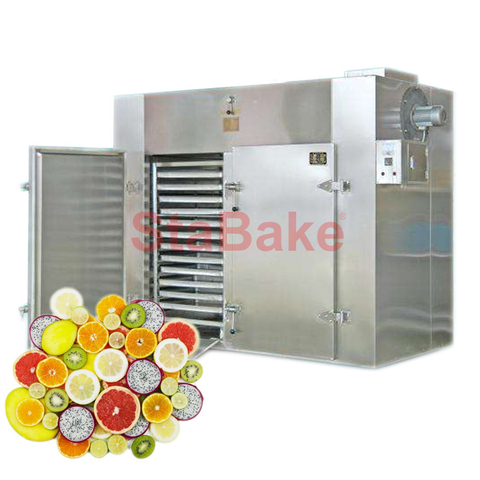
Commercial Food Drying Ovens for Flexible Small‑Batch Production
Sometimes, bigger isn't better. Maybe you're trialing a rare grape varietal. Perhaps you have a seasonal surge or a niche product line. Our commercial drying ovens offer unmatched versatility. They are incredibly straightforward to operate. You simply load the trays, set your parameters, and let the machine do its job. Cleanup is a breeze, which is vital when switching between different fruits. We construct them with fully welded interiors. This means no hidden crevices where bacteria can lurk.
These units shine in scenarios demanding agility and lower capital investment:
Tray Versatility: Easily swap tray sizes to accommodate everything from tiny pearls to giant globular grapes.
Capital Efficiency: It represents the most affordable entry point into professional-grade drying technology.
Mechanical Simplicity: Fewer moving parts translate to easier maintenance and less downtime for your team.
Making the Final Decision and Optimizing Your Line
Comparing Features: Automation, Control Systems, and Hygiene Standards
When you are investing in a raisin drying processing line, you are buying more than just metal. You are buying reliability and safety. Modern systems must meet strict food safety rules. We build our machines using SS304 stainless steel. It resists corrosion and cleans easily. Look for PLC touch-screen controls. They let your team manage everything with a few taps. Easy-disassembly designs are also critical. They allow for quick cleaning without tools. This keeps your operation running smoothly and safely.
Focus on these non-negotiable features to protect your brand and your customers. Solid-state relays and industrial-grade motors ensure the dryer runs for decades without failure. User-friendly interfaces mean even new employees can operate the complex drying cycles correctly on day one. Smooth, welded surfaces prevent bacteria from hiding in cracks, keeping your raisins safe for consumption.
Planning for Future Scalability and Integration with Other Processes
Your business will grow. Your equipment should grow with it. Avoid buying a system that is stuck in one configuration. We design our dryers to be modular. You can add more layers or longer belts later. Also, think about the whole production flow. Your dryer needs to connect with other machines. It should sit perfectly between the washing line and the packaging station. This creates a seamless raisin drying processing line. It eliminates bottlenecks and reduces manual handling.
Think about the future when you buy today. Start with a base model and add modules later as your harvest volume increases year after year. Ensure the dryer inlet matches the speed of your washing and sorting machines for continuous flow. Plan for conveyors that feed directly into packaging machines, reducing the need for human labor.
Calculating ROI and Long‑Term Maintenance Considerations
The sticker price is just the beginning. You need to calculate the Total Cost of Ownership (TCO). A cheap machine often costs more over time. Factor in energy consumption, which is a huge part of drying. Our heat pump models save thousands in electricity. Also, consider the lifespan. Our equipment is built to last over 20 years. Finally, check the availability of spare parts and technical support. We provide global support. This ensures your line stays operational when you need it most.
Keep these financial and practical points in mind to maximize your return on investment. Investing in advanced heat recovery systems pays for itself through lower utility bills within a few years. Heavy-duty construction means fewer breakdowns and a longer productive life for your capital investment. Having local or readily available technical support minimizes costly downtime during the critical harvest season.
Conclusion
Choosing the right raisin drying processing line starts with clear capacity goals and smart energy choices. StaBake offers modular belt dryers, heat pump units, and vacuum freeze dryers to match any grape type and quality need. Built with SS304 stainless steel and PLC controls, these machines ensure hygiene, efficiency, and long-term durability. With scalable designs and global technical support, StaBake helps you optimize production, cut costs, and deliver premium raisins that stand out in the market.
FAQ
Q: What defines a complete raisin drying processing line?
A: It includes washing, drying, sorting, and packaging machines working as one system.
Q: How do I match equipment to my grape varieties?
A: Different grapes need specific temperature profiles; StaBake customizes settings for each type.
Q: Why choose StaBake for my drying line?
A: Our modular designs and SS304 builds ensure hygiene, scalability, and decades of reliable service.
Q: What affects the cost of a raisin drying line?
A: Capacity, energy source, and automation level determine both upfront and long-term expenses.
Q: How does a continuous belt dryer improve efficiency?
A: It automates material flow, cutting labor and ensuring uniform drying for large-scale production.